

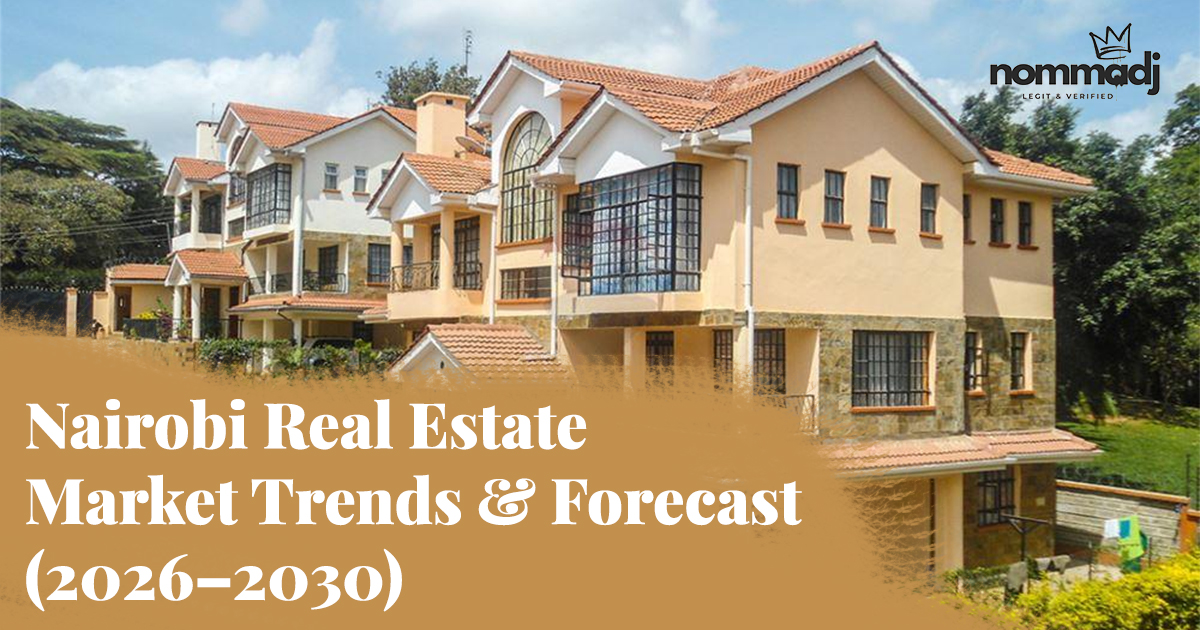
Nairobi’s real estate market is entering a defining phase. After years of rapid expansion, the market is transitioning toward quality-driven growth, infrastructure-led development, and lifestyle-focused housing. For buyers, investors, and developers, understanding these trends is essential to making informed decisions between 2026 and 2030.
Table of Contents
This guide provides a comprehensive analysis of Nairobi’s property market, examining current conditions, structural drivers, emerging property types, and future outlook.
Overview of Nairobi’s Real Estate Market
Nairobi remains Kenya’s economic, political, and commercial nucleus. Property demand is driven by:
- Population growth and urban migration
- Employment concentration
- Diplomatic and international organisation presence
- Expanding middle and upper-income segments
Despite periodic market corrections, Nairobi property has demonstrated long-term resilience.
Macro Drivers Shaping Nairobi’s Property Market
Urbanisation and Demographics
Nairobi continues to attract young professionals, families, and expatriates, sustaining housing demand across price segments.
Economic Growth
As Kenya diversifies into services, technology, and regional trade, Nairobi’s role as a regional hub strengthens real estate fundamentals.
Infrastructure Development and Property Value
Infrastructure is one of the strongest determinants of property appreciation.
Major Infrastructure Drivers
- Expressways and bypass expansions
- Commuter rail development
- Improved road connectivity to satellite towns
Properties near transport corridors consistently outperform isolated locations.
Shift Toward Vertical Living
Land scarcity and affordability constraints are driving high-density apartment development.
Why Apartments Are Outselling Bungalows
- Lower purchase prices
- Better land utilisation
- Enhanced security and amenities
Apartments now dominate Nairobi’s new residential supply.
Rise of Mixed-Use Developments
Mixed-use developments integrate:
- Residential units
- Offices
- Retail and lifestyle amenities
These developments reduce commute times and enhance live-work-play lifestyles.
Growth of Serviced Apartments & Short-Stay Rentals
Demand for flexible accommodation is increasing due to:
- Business travel
- Digital nomads
- NGO and diplomatic staff
Westlands and Kilimani lead this segment.
Luxury Property Market Trends
Luxury demand is shifting toward:
- Smart homes
- Sustainable design
- Lifestyle-centric developments
Buyers prioritise quality, privacy, and long-term value over size alone.
Neighborhood-Level Market Performance
Strong Performing Areas
- Kilimani
- Kileleshwa
- Westlands
- Parklands
Emerging Growth Zones
- Ngara
- Roysambu
- Selected satellite corridors
Price Trends and Rental Yield Outlook
While price growth has moderated, rental demand remains stable.
Key Observations
- Mid-range apartments offer the best yield stability
- Luxury rentals remain resilient in prime locations
- Oversupply risks exist in poorly planned zones
Impact of Government Policy and Regulation
Policy developments influencing the market include:
- Affordable housing initiatives
- Digitisation of land registries
- Mortgage market reforms
Regulatory clarity improves investor confidence.
Foreign & Diaspora Investment Trends
Diaspora investment remains a major market pillar, supported by:
- Improved remote transaction processes
- Professional property management
- Growing confidence in formal developments
(Internal link: How to Buy Property in Kenya)
Technology and Digital Transformation
Technology is reshaping:
- Property marketing
- Due diligence
- Facility management
Digital adoption improves transparency and efficiency.
Risks Facing Nairobi’s Real Estate Market
Key risks include:
- Overdevelopment in specific zones
- Rising construction costs
- Infrastructure delays
Mitigation requires careful location and developer selection.
Forecast for Nairobi Real Estate (2026–2030)
Expected Trends
- Continued apartment dominance
- Growth of mixed-use and smart developments
- Expansion of satellite towns
- Increased focus on sustainability
Strategic investors who align with these trends will outperform the broader market.
How Buyers and Investors Should Position Themselves
Success strategies include:
- Prioritising infrastructure-linked locations
- Investing in quality developments
- Focusing on long-term value rather than speculation
Conclusion
Nairobi’s real estate market remains fundamentally strong, evolving toward smarter, more sustainable, and lifestyle-oriented development. Stakeholders who understand these shifts and invest strategically will benefit from stable returns and long-term appreciation through 2030.
(Internal links: Real Estate Investment in Kenya, Luxury Real Estate in Nairobi, Best Neighborhoods in Nairobi)
Faqs
What are the current trends in Nairobi real estate?
Key trends include apartment-led growth, mixed-use developments, infrastructure-driven appreciation, and smart housing.
Will property prices in Nairobi continue to rise?
Prices are expected to grow steadily, particularly in well-located and infrastructure-supported areas.
Which property types will perform best between 2026 and 2030?
Apartments, serviced residences, and mixed-use developments are projected to outperform standalone housing.
How does infrastructure affect property prices?
Improved roads, expressways, and public transport significantly increase property demand and value.
Is Nairobi’s real estate market oversupplied?
Oversupply exists in select zones, but demand remains strong for well-planned, competitively priced developments.