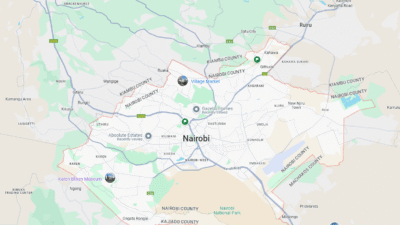



Nairobi remains Kenya’s largest and most diverse residential property market, with everything from affordable apartments and family homes to luxury apartments, townhouses, gated communities and high-value standalone houses. Understanding the Nairobi real estate market in 2026 requires looking beyond a single average price because property values, rents, demand and investment returns vary substantially from one neighbourhood to another.
Table of Contents
The latest market evidence shows a selective market rather than a uniform boom or decline. HassConsult reported that residential property prices in Nairobi’s suburbs increased by 0.9% in Q2 2026, taking the average suburban house price to about KSh33.1 million, while annual price appreciation was 2.9%. Earlier in Q1, Nairobi suburban sale prices had increased 1.1%.
At the same time, apartment markets are showing a different pattern. Some established apartment locations continue to record strong occupancy and rental performance, while increased supply has placed pressure on prices in parts of the market. HassConsult specifically noted apartment-price corrections in areas where supply was moving towards saturation.
This guide brings those trends together with current property-listing data, rental information, financing considerations and the legal steps involved in buying property in Nairobi.
Key Takeaways: Nairobi Real Estate Market 2026
- Nairobi’s residential market is neighbourhood-specific; house prices, apartment prices, rent and yields can differ significantly within a few kilometres.
- HassConsult’s Q2 2026 data recorded 0.9% quarterly growth in Nairobi suburban property prices, with the average price reaching KSh33.1 million.
- Apartments remain one of the largest parts of the Nairobi property market. Kenya Property Centre’s September 2026 snapshot showed thousands of Nairobi properties listed for sale and rent, including more than 2,500 apartments for sale.
- H1 2026 data from Cytonn put the average apartment rental yield in the Nairobi Metropolitan Area at about 6.1%, compared with 4.9% for detached residential units.
- Upper-mid-market apartment locations such as Westlands, Kilimani, Parklands and Kileleshwa continue to show significant rental activity.
- Current listing data should be treated as asking prices, not necessarily completed transaction prices.
- Mortgage affordability remains important. The CBK reported an average commercial-bank lending rate of 14.39% in July 2026, while the Central Bank Rate stood at 8.75% as of August 2026.
- Buyers should budget for more than the purchase price: legal fees, valuation, registration, stamp duty and other transaction costs can materially increase the amount of cash required.
1. Nairobi Real Estate Market Overview
What is happening in Nairobi’s property market?
Nairobi’s property market in 2026 is best described as selective and segmented.
Established suburban locations continue to attract buyers and tenants because of their proximity to employment centres, schools, hospitals, shopping centres and major transport corridors. However, not every property type is experiencing the same level of price growth.
HassConsult’s Q1 2026 research found that Nairobi suburban sale prices increased by 1.1%, while satellite-town prices fell 0.9% during the quarter. By Q2, suburban prices were still increasing, although the quarterly pace had moderated to 0.9%.
The distinction between houses and apartments is also important. HassConsult reported that some suburban standalone houses were supported by undersupply, while parts of the apartment market faced increased supply and signs of saturation.
That means a buyer should not assume that because “Nairobi property prices are rising”, every apartment or house will automatically increase in value at the same rate.
The main forces shaping the market include:
Location: Areas closer to major business districts and employment nodes generally command higher rents and property prices.
Infrastructure: Roads and transport improvements can influence accessibility and buyer and tenant demand.
Housing supply: An area with many new apartments competing for tenants can experience slower rent growth even when the broader Nairobi market is expanding.
Affordability: Household purchasing power remains a major constraint, particularly outside Nairobi’s prime suburbs.
Property quality: Newer buildings with reliable water, security, parking, lifts, backup power and recreational amenities can attract a premium over older buildings.
Buyer demand versus renter demand
Buying and renting represent different segments of Nairobi real estate.
Homebuyers are often concerned with long-term ownership, affordability, financing, land value, school access, neighbourhood quality and capital appreciation.
Renters, on the other hand, tend to prioritise:
- Monthly affordability
- Commute time
- Security
- Parking
- Water reliability
- Access to public transport
- Proximity to work
- Shopping and social amenities
- Apartment amenities
This difference explains why a location can be attractive to landlords even when its property sale prices are relatively high.
Property supply in Nairobi
Nairobi has substantial property supply across multiple price bands.
Kenya Property Centre’s September 2026 listings included more than 3,800 properties for sale in Nairobi and more than 4,000 properties for rent, although portal listings are not a complete census of the Nairobi market and can include commercial properties, land and duplicate or differently classified listings.
Apartments make up a significant part of the available stock. KPC’s September 2026 data showed more than 2,500 apartment listings for sale in Nairobi.
This abundance creates both opportunities and challenges.
For buyers, more supply can create negotiating opportunities and greater choice.
For developers and landlords, however, high supply in a particular neighbourhood can make tenant acquisition and rent growth more difficult.
2. Nairobi House Prices in 2026
There is no single “Nairobi house price”.
A standalone house in Karen, Runda or Lavington may cost many times more than an apartment in Embakasi, Roysambu or Zimmerman.
For Nairobi suburbs, HassConsult’s Q2 2026 data put the average suburban house price at around KSh33.1 million, after a 0.9% quarterly increase. This figure should not be confused with the price of an average apartment or an affordable house.
Kenya Property Centre’s September 2026 listing data showed a much wider spread: its Nairobi house-for-sale category had a median listing level around KSh130 million, while the broad Nairobi property-for-sale category was around KSh28 million. These figures demonstrate why portal category averages can be heavily affected by the mix of luxury, commercial and high-value properties included in a dataset.
Practical price bands by property type
The following ranges are useful for preliminary budgeting rather than valuation:
| Property type | Indicative Nairobi 2026 budget |
|---|---|
| Bedsitter / studio apartment | KSh3M–KSh7M+ |
| 1-bedroom apartment | KSh4M–KSh10M+ |
| 2-bedroom apartment | KSh7M–KSh18M+ |
| 3-bedroom apartment | KSh10M–KSh25M+ |
| 4-bedroom apartment | KSh15M–KSh35M+ |
| Premium/luxury apartment | KSh25M–KSh80M+ |
| Townhouse | KSh20M–KSh70M+ |
| Detached family home | KSh25M–KSh100M+ |
| Prime luxury home | KSh70M–KSh300M+ |
These are planning ranges, not official market averages. Actual asking and transaction prices vary by location, floor area, land size, tenure, age, finishing, amenities and development quality.
3. Houses for Sale in Nairobi
The market for houses for sale in Nairobi can be divided into apartments, townhouses, maisonettes, bungalows, semi-detached houses and detached homes.
Affordable houses
Affordable housing is most commonly found in eastern, northern and southern Nairobi and in selected satellite towns.
Areas worth investigating include:
- Embakasi
- Umoja
- Kayole
- Donholm
- Imara Daima
- Zimmerman
- Kasarani
- Roysambu
- Kahawa
- South B
- South C
The meaning of “affordable” is relative. A property costing KSh10 million may be affordable to one household but inaccessible to another.
2-bedroom houses and apartments
Two-bedroom properties remain an important part of Nairobi’s owner-occupier and rental market.
They work particularly well for:
- First-time buyers
- Young families
- Professionals
- Diaspora buyers
- Buy-to-let investors
- Downsizers
In the upper-mid-market, apartment prices can quickly exceed KSh10 million.
For example, Kenya Property Centre’s August 2026 listing data showed a median asking price of about KSh12.7 million for apartments in Kilimani, while Kileleshwa was around KSh16.3 million and Westlands about KSh16 million.
3-bedroom properties
Three-bedroom homes are particularly relevant to families.
When comparing them, look beyond bedroom count. Check:
- Floor area
- Number of bathrooms
- DSQ
- Parking
- Outdoor space
- Storage
- Service charge
- Security
- Water supply
- Power backup
- Access roads
- School and hospital proximity
Two properties with the same number of bedrooms may have very different values.
4-bedroom and 5-bedroom houses
Large homes are concentrated in premium and high-end neighbourhoods such as:
- Karen
- Runda
- Lavington
- Kitisuru
- Gigiri
- Muthaiga
- Lower Kabete
- Rosslyn
For detached properties, land size is often as important as the building itself.
4. Apartments for Sale in Nairobi
Apartments are one of the largest and most searchable parts of the Nairobi real estate market.
KPC’s September 2026 snapshot showed more than 2,500 apartments listed for sale in Nairobi.
Apartment developments generally fall into four broad categories.
Affordable apartments
These typically target buyers seeking lower entry prices.
Common locations include:
- Embakasi
- Imara Daima
- Zimmerman
- Kahawa
- Kasarani
- Roysambu
- Ruai
- Dagoretti
- parts of South B and South C
Apartment pricing depends heavily on size and development standards.
Mid-market apartments
Mid-market properties are prominent in locations such as:
- Kilimani
- Kileleshwa
- South C
- South B
- Parklands
- Langata
- parts of Westlands
They attract both owner-occupiers and investors.
Luxury apartments in Nairobi
The luxury apartments Nairobi market includes locations such as:
- Westlands
- Parklands
- Riverside
- Lavington
- Gigiri
- Kitisuru
- Upperhill
Luxury generally means more than expensive finishes. Buyers should look at:
- Location
- Development quality
- Architecture
- Apartment size
- Security
- Parking allocation
- Elevators
- Backup power
- Water systems
- Gym
- Swimming pool
- Children’s facilities
- Concierge or reception
- Management
- Service charge
- Building maintenance
Off-plan apartments versus ready-to-move-in apartments
Off-plan property
The buyer purchases before completion.
Potential advantages include:
- Lower initial entry price
- Developer payment plans
- Greater choice of units
- Potential for value growth before completion
Risks include:
- Construction delays
- Changes to specifications
- Developer financial problems
- Market conditions changing before completion
- Financing or cash-flow pressure
Ready property
A completed apartment allows buyers to inspect the actual building and surrounding environment.
You can evaluate:
- Finishing quality
- Water pressure
- Noise
- Natural lighting
- Parking
- Neighbours
- Management
- Service charge
- Actual rental demand
For cautious buyers, physical inspection can significantly improve due diligence.
5. Apartments for Rent in Nairobi
The apartments for rent in Nairobi segment remains one of the largest property-search markets in Kenya.
Current listing data shows thousands of Nairobi rental properties, while research by property platforms and consultancies continues to highlight strong demand for professionally managed apartment stock in major residential nodes.
Rental prices vary by neighbourhood and apartment size.
Typical apartment rent ranges in Nairobi
| Location type | 1 bedroom | 2 bedroom | 3 bedroom |
|---|---|---|---|
| Budget areas | KSh8K–15K | KSh13K–25K | KSh20K–40K |
| Middle market | KSh20K–40K | KSh30K–65K | KSh50K–100K |
| Upper middle market | KSh35K–70K | KSh60K–130K | KSh90K–180K |
| Prime/luxury | KSh60K–120K+ | KSh100K–200K+ | KSh150K–300K+ |
Rental prices are indicative and can differ substantially depending on whether the apartment is furnished, serviced, newly built or located within a premium development.
Recent 2026 listing research places one-bedroom apartments in Kilimani around KSh55,000–75,000 and two-bedroom apartments around KSh85,000–120,000, while Westlands commands comparable or higher premium rents depending on the development.
Kenya Property Centre’s August 2026 data put the median listed rent for apartments in Kilimani at about KSh97,800 per month, Kileleshwa at KSh111,500, Lavington at KSh114,000 and Westlands at approximately KSh159,800.
Again, these are listing medians across different apartment sizes rather than the rent of an identical 2- or 3-bedroom unit.
6. Best Places to Live in Nairobi
There is no single best neighbourhood for everyone.
The right area depends on your budget, commute, lifestyle, family requirements and whether you are renting or buying.
Nairobi area comparison
| Area | Typical rent level | Property price level | Best for | Investment considerations |
|---|---|---|---|---|
| Westlands | High to premium | High | Professionals, executives, expatriates | Strong commercial ecosystem, rental demand |
| Kilimani | Upper-mid | Upper-mid | Professionals, young families | Large apartment market and strong rental activity |
| Parklands | Upper-mid to high | Upper-mid to high | Families, professionals, medical community | Established area and strong apartment occupancy |
| Lavington | High | High | Families, professionals | Limited land and established neighbourhood appeal |
| Kileleshwa | Upper-mid | Upper-mid to high | Families, professionals | Significant apartment stock and tenant demand |
| South C | Mid-market | Mid-market | Families, airport/industrial corridor commuters | Accessible entry point with established housing |
| South B | Mid-market | Mid-market | First-time buyers, families | Strong accessibility and comparatively moderate pricing |
| Karen | High | Very high | Families, executives, lifestyle buyers | Land scarcity, larger homes, premium tenant segment |
| Runda | High | Very high | Executives, diplomats, families | Premium detached housing and land |
| Ruaka | Mid-market to upper-mid | Mid-market to upper-mid | Professionals, first-time investors | Satellite-market growth and proximity to northern suburbs |
The table is a comparative planning guide rather than a ranking. Rent and property prices vary by unit type, size, building and specific street.
Westlands
Westlands combines residential, commercial, retail and hospitality activity.
It is especially attractive to people who value proximity to:
- CBD
- Waiyaki Way
- major shopping centres
- offices
- restaurants
- international organisations
- entertainment
Cytonn’s H1 2026 apartment data showed Westlands with an average apartment rental yield of 7.4%, price per square metre of about KSh171,254 and rent of approximately KSh952 per square metre. Its total return was reported at 9.3%.
KPC’s August 2026 apartment listings put the median asking price at approximately KSh16 million, while listed apartment rent was around KSh159,800 per month.
Kilimani
Kilimani has one of Nairobi’s largest concentrations of apartments.
Its appeal comes from proximity to:
- Yaya Centre
- Ngong Road
- CBD
- Upperhill
- major schools
- hospitals
- restaurants and entertainment
KPC’s August/June 2026 data showed apartment asking prices around KSh12.6–12.7 million, depending on the reporting month, while median listed apartment rent in August was approximately KSh97,800 per month.
Parklands
Parklands is a mature residential neighbourhood close to Westlands and major healthcare, retail and business facilities.
Cytonn recorded apartment prices around KSh127,053 per square metre and rents around KSh903 per square metre in H1 2026, with a rental yield of about 6.9%.
KPC’s August 2026 apartment listings showed a median asking price around KSh18 million, although the dataset had only a small number of listings, so this figure should not be treated as a robust market-wide valuation.
Lavington
Lavington combines upscale apartments with detached and semi-detached homes.
HassConsult’s Q1 2026 data showed Lavington recording quarterly house-price growth of 4.2% and annual growth of 12.7%.
KPC’s August 2026 data placed the median listed apartment price at roughly KSh12.6 million and median apartment rent around KSh114,000 per month.
Kileleshwa
Kileleshwa has evolved into one of Nairobi’s major apartment markets.
Its appeal includes:
- proximity to CBD
- proximity to Kilimani
- access to schools
- growing apartment supply
- modern residential developments
KPC’s August 2026 data placed the median listed apartment price at approximately KSh16.3 million, down from approximately KSh17.5 million a year earlier.
The same source’s July 2026 data showed median listed apartment rent around KSh106,600 before rising to KSh111,500 in August.
South C
South C is established, relatively accessible and popular with families.
Its location provides access to:
- Mombasa Road
- Lang’ata Road
- Nairobi CBD
- Wilson Airport
- hospitals
- schools
- shopping facilities
Cytonn’s H1 2026 apartment data recorded South C at approximately KSh120,317 per square metre with rent around KSh475 per square metre and a 6.1% rental yield.
South B
South B remains one of the better-known residential markets along the southern side of Nairobi.
It attracts buyers looking for relatively established neighbourhoods without the pricing associated with some western suburbs.
Cytonn recorded apartment prices of approximately KSh111,404 per square metre and a rental yield of about 6.3% in H1 2026.
Karen
Karen is dominated by larger homes, compounds, townhouses and premium residences.
Its appeal includes:
- large plots
- greenery
- schools
- shopping centres
- lifestyle amenities
- proximity to Ngong Road and southern bypass connections
Cytonn recorded Karen’s detached residential segment at around KSh196,333 per square metre, rent of KSh994 per square metre and a rental yield of 5.6% in H1 2026.
HassConsult reported annual house-price growth of 13.2% in Karen in Q1 2026.
Runda
Runda is a premium residential area known primarily for detached homes and large compounds.
It is particularly associated with:
- executives
- diplomats
- senior professionals
- families
- premium rental housing
Cytonn recorded Runda at approximately KSh205,193 per square metre, with rent around KSh874 per square metre and a 5.8% rental yield in H1 2026.
Ruaka
Ruaka is technically outside Nairobi County but forms part of the wider Nairobi Metropolitan residential market.
It has experienced significant residential development because of:
- proximity to Westlands
- Limuru Road
- northern Nairobi
- shopping facilities
- new apartment developments
Cytonn recorded Ruaka apartment prices at approximately KSh117,094 per square metre and rent at KSh591 per square metre, with a rental yield of around 6.4% in H1 2026.
7. Best Areas for Property Investment in Nairobi
Instead of asking which area is “best”, investors should compare several measurable factors.
Rental yield
Rental yield shows how much rental income a property produces relative to its purchase price.
Gross rental yield formula
Gross rental yield = Annual rental income ÷ Property purchase price × 100
For example:
A property costing KSh10 million and generating KSh60,000 per month:
Annual rent:
KSh60,000 × 12 = KSh720,000
Gross yield:
KSh720,000 ÷ KSh10,000,000 × 100 = 7.2%
This is gross yield. It does not account for vacancy, maintenance, management, service charges, insurance, taxes or financing.
Capital appreciation
Property investment returns can come from both rent and changes in property value.
Cytonn’s H1 2026 Nairobi Metropolitan residential research recorded average residential price appreciation of 1.4%, while apartment price appreciation averaged 1.7%.
HassConsult’s Q1 figures showed much larger variations between neighbourhoods. Lavington, Karen, Spring Valley and Kilimani recorded stronger quarterly movements than several other areas.
This demonstrates why location-level analysis is more useful than relying only on Nairobi-wide averages.
Tenant demand
An investment property is only productive when someone wants to occupy it.
Analyse:
- Number of competing rentals
- Typical vacancy periods
- Target tenant income
- Nearby employers
- Access to transport
- Schools and hospitals
- Security
- Internet connectivity
- Parking
- Development quality
Infrastructure
Infrastructure can influence accessibility and long-term demand.
Examples include:
- highways
- bypasses
- public transport routes
- commercial centres
- schools
- hospitals
- employment hubs
- utilities
But infrastructure alone does not guarantee price appreciation.
8. Affordable Areas to Buy Property in Nairobi
Buyers searching for affordable houses in Nairobi should expand their search beyond traditionally expensive suburbs.
Areas commonly considered in lower and middle price segments include:
- Embakasi
- Umoja
- Kayole
- Kasarani
- Roysambu
- Zimmerman
- Kahawa West
- Imara Daima
- South B
- South C
- Dagoretti
- Ruai
Cytonn’s H1 2026 apartment data gives a useful illustration of the price gap. Apartment prices were approximately KSh89,070 per square metre in Kahawa West and KSh88,184 in Imara Daima, compared with KSh171,254 per square metre in Westlands.
That difference can materially change the amount of capital required for an investor.
9. Luxury Property in Nairobi
The Nairobi luxury market is concentrated in areas such as:
- Runda
- Karen
- Lavington
- Kitisuru
- Gigiri
- Westlands
- Parklands
- Rosslyn
- Muthaiga
- Lower Kabete
Luxury property buyers often place more importance on privacy, land size, security, architecture, neighbourhood prestige and lifestyle amenities than on price alone.
For luxury investors, however, high purchase prices mean rental yields can be lower than in smaller apartments.
Cytonn’s H1 2026 data illustrates the difference: detached high-end homes had an average rental yield of 5.2%, while the apartment market averaged about 6.1%.
10. Buying vs Renting in Nairobi
The decision to buy or rent depends on your time horizon, cash flow, financing and personal circumstances.
Example: Buying a Kilimani apartment versus renting
Suppose an apartment has:
Purchase price: KSh12.7 million
Monthly rent equivalent: KSh97,800
Annual rent equivalent:
KSh97,800 × 12 = KSh1,173,600
Gross rental yield:
KSh1,173,600 ÷ KSh12,700,000 × 100
= 9.24%
This is an illustrative calculation using area-wide listing medians from KPC rather than a like-for-like valuation of the same apartment. The published figures were approximately KSh12.7 million for apartments for sale and KSh97,800 per month for apartment rent in Kilimani in 2026.
Why the calculation matters
A buyer should compare:
Annual rent avoided
against:
Mortgage payments + service charge + maintenance + insurance + taxes + opportunity cost of the deposit
The mathematical yield of a property should therefore not automatically be interpreted as the investor’s actual net return.
11. Mortgage and Property Financing in Kenya
Mortgage financing is an important part of Nairobi’s real estate market.
As of July 2026, the Central Bank of Kenya reported an average commercial-bank lending rate of 14.39%. The Central Bank Rate was 8.75% as of August 11, 2026.
Individual mortgage rates can differ substantially depending on the lender, borrower, property, loan structure and whether the rate is fixed or variable.
Deposit
A buyer may need to contribute a percentage of the property value as a deposit.
For illustration:
Property price = KSh12.7 million
At a 20% deposit:
Deposit = KSh2.54 million
Loan:
KSh12.7M − KSh2.54M = KSh10.16 million
Illustrative mortgage repayment
Using an illustrative 14.39% annual interest rate over 20 years:
Loan = KSh10.16 million
Estimated monthly repayment ≈ KSh129,230
Estimated total payments over 20 years ≈ KSh31.02 million
Estimated interest component ≈ KSh20.86 million
This is a mathematical example, not a quote from a bank. Actual mortgages may use different rates, fees, insurance, repayment structures and terms.
It demonstrates why buyers should compare the total cost of borrowing, rather than focusing only on the monthly repayment.
Mortgage affordability
Before taking a mortgage to buy property in Nairobi, it is important to assess whether the total cost of homeownership fits comfortably within your monthly budget. The mortgage repayment is only one part of the cost. You should also account for other recurring expenses and existing financial commitments.
When calculating mortgage affordability, compare the following against your reliable monthly income:
- Monthly mortgage repayment – The principal and interest you will pay to the lender each month.
- Service charge – Common in apartments and gated developments, covering shared facilities, security, cleaning, landscaping, lifts and other communal services.
- Utilities – Electricity, water, internet, cooking gas and other household services.
- Insurance – Depending on the property and lender, this may include mortgage protection, home insurance or building insurance.
- Property maintenance – Allow for repairs, repainting, plumbing, electrical work, appliance replacement and general upkeep.
- Existing debts – Include car loans, personal loans, credit-card balances, school-fee obligations and other regular debt repayments.
- Property-related taxes and fees – Depending on the property, location and ownership structure, you may also need to budget for land rates, ground rent or other applicable charges.
A property can be technically affordable but financially uncomfortable if the mortgage consumes too much of your monthly income. The goal should not simply be to qualify for the largest mortgage a lender is willing to offer. Instead, consider how the repayment would affect your ability to save, invest, handle emergencies and meet other household expenses.
For example, a buyer earning a stable monthly income may qualify for a particular mortgage amount based on the lender’s assessment. However, if the resulting repayment leaves very little money after household expenses, the buyer could face financial pressure when interest rates change, income falls or an unexpected expense arises.
Build an affordability buffer
When planning to buy a house or apartment in Nairobi, consider keeping an emergency fund in addition to your deposit and transaction costs. This can help cover unexpected repairs, temporary income interruptions or other financial emergencies without immediately relying on additional debt.
It is also useful to calculate your total monthly housing cost, rather than looking only at the advertised mortgage repayment:
Total monthly housing cost = Mortgage repayment + service charge + utilities + insurance + maintenance + other property-related costs
This gives you a more realistic picture of what owning the property will cost each month.
Consider interest-rate changes
Mortgage affordability should also account for the possibility of changes in lending costs. If your mortgage has a variable or adjustable interest rate, a change in the applicable rate can increase your monthly repayment. Ask the lender how the interest rate is determined, whether the rate can change, and how a rate increase would affect your repayment.
Before signing a mortgage agreement, request a clear breakdown of the loan amount, interest rate, repayment period, monthly instalment, fees, insurance requirements and total cost of borrowing.
Don’t forget the upfront costs
Mortgage affordability is not only about monthly repayments. Buyers should also plan for upfront expenses associated with purchasing property. Depending on the transaction, these may include the deposit, legal fees, valuation fees, stamp duty, loan-related charges, moving costs and other transaction expenses.
Having enough money for the deposit but insufficient funds for these additional costs can create financial pressure immediately after purchase.
The key takeaway: A property is affordable when you can meet the mortgage repayment and other ownership costs while still maintaining a reasonable budget for everyday living, savings, emergencies and other financial commitments. Before committing to a mortgage, calculate the full cost of ownership and stress-test your budget against higher expenses or changes in income.
12. Property Investment in Nairobi
Property investment in Nairobi can generate returns from several sources.
1. Rental income
The property generates monthly cash flow.
2. Capital appreciation
The property’s value increases over time.
3. Development value
Investors can improve an existing property or develop land.
4. Off-plan investment
An investor purchases during the development phase.
5. Buy-to-let
The investor purchases property specifically to rent it out.
Buy-to-let strategy
A simple buy-to-let analysis should include:
Purchase price: KSh12,000,000
Monthly rent: KSh80,000
Annual gross rent: KSh960,000
Gross yield: 8%
But your actual return will be lower after:
- Vacancy
- Management
- Repairs
- Service charge
- Insurance
- Legal costs
- Financing costs
- Taxes
This is why professional investors distinguish between gross yield and net yield.
What makes a good investment property?
Look for a combination of:
Entry price + tenant demand + rent + occupancy + operating costs + future supply + infrastructure + resale market.
A property with a very high advertised yield may not be attractive if tenants are difficult to find or the building has unusually high maintenance expenses.
13. Legal Process of Buying Property in Nairobi
Property transactions should be handled with appropriate legal and professional advice.
The broad process includes the following.
Step 1: Identify the property
Verify:
- Seller identity
- Property address
- Title details
- Development details
- Physical location
- Asking price
Step 2: Conduct an official title search
An official land search verifies ownership and can reveal encumbrances such as:
- Charges
- Cautions
- Restrictions
The State Department for Lands describes the search certificate as an important due-diligence document before property purchases, leases and financing.
The government has also developed Ardhisasa, an online platform for accessing land information and submitting various land-service applications.
Step 3: Carry out due diligence
Check:
- Title
- Rates
- Land rent
- Development approvals
- Building plans
- Physical boundaries
- Outstanding loans
- Company ownership where applicable
- Occupancy status
- Service charge
- Management company
- Developer documents
For apartments, verify the sectional-property documentation and the relationship between the individual unit and common property.
Step 4: Sign a sale agreement
The sale agreement should clearly state:
- Purchase price
- Deposit
- Completion period
- Payment schedule
- Completion documents
- Vacant possession where applicable
- Default provisions
- Conditions precedent
Kenya’s Land Registration Regulations provide for the documentation and requirements supporting land transfers.
Step 5: Valuation for stamp duty
The State Department for Lands states that stamp-duty valuation determines the applicable property value for calculating stamp duty and may require documents including the title, transfer instrument, official search and other supporting documents.
Step 6: Pay stamp duty
Stamp duty applies to many land transactions involving a change of ownership.
Current statutory guidance generally provides:
- 4% for transfers of immovable property in urban areas
- 2% for rural property
The exact applicable treatment should be confirmed for the specific property and transaction because classification matters.
For example, a KSh10 million urban property at 4% would attract KSh400,000 in stamp duty.
Step 7: Register the transfer
The Land Registration Act provides that a transfer is completed through filing the instrument and registration of the transferee as proprietor.
The State Department for Lands currently lists documentation such as the executed transfer, supporting identification and tax documents, title, applicable clearances and stamp-duty documentation among the transfer requirements.
Step 8: Obtain evidence of registered ownership
Do not treat payment alone as proof that the transfer is complete.
Confirm that the new ownership has been properly registered.
14. Sectional Titles and Buying an Apartment
Apartment buyers should understand sectional ownership.
Kenya’s Sectional Properties Act provides the framework for dividing buildings into individually owned units while common property is held collectively by proprietors as tenants in common.
Before buying an apartment, ask for:
- Sectional plan
- Unit title
- Ownership documentation
- Management information
- Service-charge budget
- Rules governing common areas
- Parking rights
- Utility arrangements
- Developer documentation where relevant
Do not assume that the apartment’s advertised floor area tells you everything about your legal interest in the property.
15. Land Rates, Land Rent and Other Costs
Property ownership can involve costs beyond the headline price.
Potential costs include:
- Stamp duty
- Legal/conveyancing fees
- Registration fees
- Search fees
- Valuation fees where applicable
- Land rates
- Land rent where applicable
- Service charge
- Insurance
- Mortgage-related charges
- Repairs and maintenance
Kenya’s Land Registration Act and related regulations require relevant clearances and documentation in applicable transfer situations.
Capital Gains Tax
Property sellers should also understand Capital Gains Tax.
KRA states that the current CGT rate is 15% of the net gain, and that CGT is payable by the transferor/seller subject to the applicable rules and exemptions.
Net gain is generally calculated using the transfer value and adjusted acquisition costs, including allowable acquisition, enhancement and incidental costs.
Because tax treatment can vary according to the circumstances of the transaction, sellers should obtain professional tax advice.
16. Nairobi Satellite Towns and Metropolitan Property
Nairobi’s property market increasingly extends into the wider metropolitan area.
Important locations include:
- Kiambu
- Ruiru
- Juja
- Kikuyu
- Ruaka
- Syokimau
- Athi River
- Kitengela
- Ngong
- Rongai
- Machakos
These areas can offer lower entry prices than some established Nairobi suburbs.
However, the lower price needs to be considered alongside:
- Commute time
- Infrastructure
- Public transport
- Road quality
- Utilities
- Employment centres
- Social amenities
- Rental demand
- Future supply
Kiambu
Kiambu benefits from proximity to northern Nairobi and the wider Kiambu Road corridor.
Its market includes apartments, standalone homes and land.
Ruiru
Ruiru is a major residential growth area north-east of Nairobi.
Cytonn’s H1 2026 data recorded apartment prices of approximately KSh94,221 per square metre and rental yield of around 6.0%.
Juja
Juja has strong connections to Thika Road and hosts significant residential development.
Cytonn’s H1 2026 detached property data recorded annual uptake of 12.9% for its Juja category, while apartment-market analysis continues to track the area as a lower-mid-market node.
Kikuyu
Kikuyu benefits from its western connection to Nairobi.
Cytonn recorded apartment prices of approximately KSh87,218 per square metre, rent of KSh479 per square metre and rental yield of 5.4% in its H1 2026 data.
Syokimau
Syokimau is strategically positioned near:
- Nairobi Expressway
- Mombasa Road
- Jomo Kenyatta International Airport
- SGR facilities
- major logistics and employment areas
Cytonn recorded apartment prices around KSh75,093 per square metre and a rental yield of approximately 5.2% in H1 2026.
Athi River
Athi River provides a lower-price alternative in the Nairobi metropolitan corridor.
Cytonn recorded apartment prices around KSh63,208 per square metre and a rental yield of about 6.5% in H1 2026.
HassConsult’s Q1 2026 research, however, showed Athi River house prices declining 2.4% quarter-on-quarter, demonstrating why satellite-town performance should not be assumed to move in one direction.
Machakos
Machakos is outside the immediate Nairobi metropolitan residential market, but it can be considered by buyers seeking a lower entry cost, land or a longer-term growth strategy.
The key considerations become infrastructure, employment, population growth, local rental demand and proximity to Nairobi rather than simply comparing current property prices.
17. What to Check Before Buying Property in Nairobi
Before paying a deposit, create a due-diligence checklist.
Property
Confirm:
- Title
- Ownership
- Survey information
- Physical location
- Boundaries
- Access
- Utilities
- Development approvals
Financial
Calculate:
- Purchase price
- Deposit
- Mortgage
- Stamp duty
- Legal fees
- Registration
- Valuation
- Service charge
- Renovations
- Insurance
- Moving costs
Investment
Calculate:
- Monthly rent
- Annual rent
- Gross yield
- Vacancy
- Operating costs
- Net yield
- Expected resale value
- Future competing supply
Apartment-specific
Check:
- Sectional title
- Service charge
- Management company
- Parking
- Lift maintenance
- Backup power
- Water system
- Security
- Sinking fund
- Building insurance
18. Common Property-Buying Mistakes in Nairobi
Buying purely because property prices are rising
Past growth does not guarantee future appreciation.
Comparing only purchase prices
A KSh10 million property with low rent may be less productive than a KSh12 million property with strong occupancy and rental income.
Ignoring service charge
High-rise developments can have significant monthly costs.
Failing to conduct a title search
This can expose a buyer to serious legal and financial risks.
Trusting photos instead of inspecting the property
Visit at different times of day where possible.
Ignoring future supply
An area with hundreds of new apartments coming to market may face additional rental competition.
Choosing an area before defining the target tenant
An investor should first identify who is expected to rent the property.
19. Nairobi Real Estate Market Trends to Watch in 2026
1. Continued apartment development
Apartment development remains an important source of housing supply in Nairobi.
2. Selective price growth
The latest HassConsult data points to differentiated performance between neighbourhoods and between property types.
3. Rental affordability
HassConsult reported that suburban average house rents crossed KSh200,000 in Q1 2026, while satellite-town rents reached around KSh64,765.
The significance of this data is not that every Nairobi tenant pays anything close to those figures; rather, it shows how strongly the average is affected by high-end suburban housing.
4. Demand for professionally managed housing
HassConsult’s 2026 commentary identified increasing demand for professionally managed residences and serviced living in parts of the market.
5. Infrastructure-led growth
Transport improvements continue to shape where people can realistically live while maintaining access to Nairobi’s employment centres.
6. Greater importance of rental yield
As buyers become more financially disciplined, the relationship between purchase price and achievable rent becomes increasingly important.
20. How to Choose Property in Nairobi Based on Your Goal
For a first-time homebuyer
Prioritise:
Affordability → commute → safety → schools → maintenance costs
You do not necessarily need the most expensive neighbourhood.
For a family home
Prioritise:
Space → schools → security → access → neighbourhood environment
South C, South B, Karen, Lavington, Kileleshwa and selected parts of Westlands can all provide different combinations of these factors.
For a rental investor
Prioritise:
Purchase price → rent → occupancy → yield → maintenance → tenant pool
Do not buy simply because the property looks luxurious.
For a luxury buyer
Prioritise:
Location → privacy → architecture → land → amenities → security → long-term value
For a diaspora buyer
A remote buyer should place additional emphasis on:
- Independent due diligence
- Licensed professionals
- Title verification
- Physical inspection by a trusted representative
- Developer track record
- Payment documentation
- Formal contracts
- Independent valuation
21. Nairobi Property Investment: A Simple Investor Framework
Before committing capital, score the opportunity using your own financial criteria.
| Factor | Questions to ask |
|---|---|
| Purchase price | Is it competitive with similar properties? |
| Rent | What rent can realistically be achieved? |
| Yield | What is the gross and net yield? |
| Vacancy | How long might the property remain vacant? |
| Supply | How many similar properties are being developed? |
| Location | What attracts tenants to the area? |
| Infrastructure | How accessible is the property? |
| Building quality | Will maintenance costs be manageable? |
| Financing | Does the rent cover a reasonable portion of debt service? |
| Exit | Who would buy this property from you later? |
This approach is more useful than simply asking whether a property is in a “hot” neighbourhood.
22. Nairobi Real Estate Market 2026: Final Outlook
The Nairobi real estate market in 2026 is not moving as one market.
Prime suburbs, apartment markets, lower-cost areas and satellite towns are experiencing different combinations of price movement, rental demand, supply and investment returns.
HassConsult’s latest 2026 data shows continued resilience in Nairobi suburbs, while satellite markets and some apartment segments remain more variable.
Cytonn’s H1 2026 research similarly shows differences between apartments and detached homes, with apartments producing a higher average rental yield than detached units across the Nairobi Metropolitan Area.
For buyers, this means the most important question is not simply:
“Is Nairobi real estate going up?”
A better question is:
“Which property, in which location, at what price, for what purpose, with what expected rental income and operating costs?”
That approach allows homebuyers, landlords, developers and diaspora investors to assess opportunities using actual property economics rather than headlines.
Frequently Asked Questions About Nairobi Real Estate
What is the average price of property in Nairobi in 2026?
There is no single meaningful average for all property types. Kenya Property Centre’s September 2026 snapshot put its broad Nairobi property-for-sale listing median at about KSh28 million, while apartments were around KSh13 million and houses around KSh130 million. The differences reflect the mix of properties in each category.
How much does an apartment cost in Nairobi?
Apartment prices vary from several million shillings in affordable areas to tens of millions for premium apartments. KPC’s 2026 data showed median listed apartment prices of about KSh12.7 million in Kilimani, KSh16.3 million in Kileleshwa and KSh16 million in Westlands.
How much is rent in Nairobi?
Rent depends on location and property type. Budget apartments can be below KSh20,000 per month, while prime two- and three-bedroom apartments can cost well over KSh100,000 per month.
Which are the best places to live in Nairobi?
Different areas suit different lifestyles. Westlands suits people who prioritise access to business and urban amenities; Kilimani and Kileleshwa have extensive apartment stock; Karen and Runda are associated with larger premium homes; South B and South C offer more moderate alternatives.
Is Nairobi property a good investment?
Property returns depend on purchase price, rent, occupancy, operating costs and capital appreciation. H1 2026 Cytonn data recorded an average apartment rental yield of about 6.1% across the Nairobi Metropolitan Area.
Which Nairobi areas have strong rental demand?
Westlands, Kilimani, Parklands and Kileleshwa have substantial apartment rental markets. However, investors should compare tenant demand against competing supply before buying.
Is it better to buy or rent in Nairobi?
The answer depends on your financial circumstances, expected length of stay, mortgage cost, opportunity cost of capital and the property itself.
What is the stamp duty on property in Nairobi?
Transfers of immovable property in urban areas generally attract stamp duty at 4%, while the applicable rate for rural property is generally 2%. The exact classification and valuation should be confirmed for the individual transaction.
Who pays Capital Gains Tax when property is sold?
KRA states that Capital Gains Tax is generally payable by the transferor/seller, with the current rate at 15% of the net gain, subject to applicable rules and exemptions.
What should I check before buying a house in Nairobi?
Conduct an official title search, verify ownership, investigate encumbrances, inspect the property, confirm rates and rent clearances where applicable, review the sale agreement and use a qualified conveyancing advocate.
Can I buy a Nairobi apartment off-plan?
Yes. Off-plan purchases are common in Nairobi. Buyers should investigate the developer’s track record, approvals, payment schedule, completion terms, title structure, construction progress and contractual protections.
What is the difference between gross yield and net yield?
Gross yield uses rental income before expenses. Net yield deducts expenses such as maintenance, vacancy, management and other applicable property costs.
Are satellite towns cheaper than Nairobi?
Many satellite-town properties have lower entry prices than comparable homes in prime Nairobi suburbs, but the difference should be assessed alongside commuting costs, infrastructure, utilities and rental demand.
Is buying land or buying an apartment better for investment?
They have different characteristics. Apartments can generate rental income, while land typically has lower ongoing operating costs but does not generate rent unless developed or otherwise monetised.
Do I need a lawyer to buy property in Kenya?
For a significant property transaction, using a qualified conveyancing advocate is strongly advisable. The advocate can conduct legal due diligence, review the sale agreement, coordinate the transfer and identify legal issues before completion.