
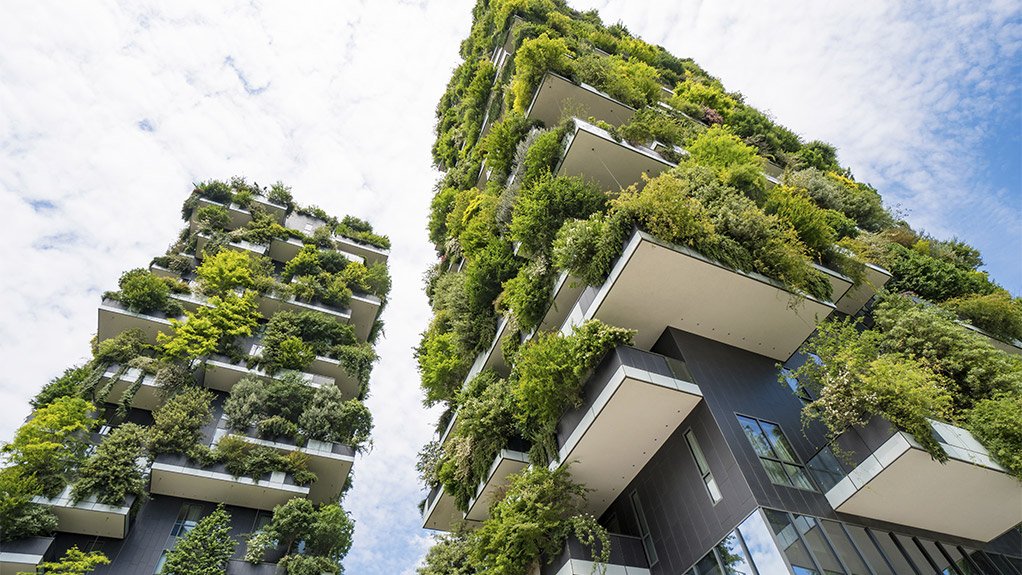

Uganda’s construction sector is entering a period in which energy efficiency, climate resilience, water conservation and sustainable materials are becoming increasingly important to property developers, homeowners and investors.
The shift is being driven by more than environmental concerns. Rising electricity costs, rapid urbanisation, pressure on household budgets, climate-related risks and growing demand for better-quality buildings are changing how Ugandans think about property.
For developers, the question is increasingly moving from “Does a green building cost more?” to “How much will this building cost to operate over its lifetime?”
That distinction matters in Uganda, where affordability remains a major challenge. The Ministry of Lands, Housing and Urban Development estimates a housing deficit of approximately 2.2 million units, including about 210,000 units in urban areas, while annual housing demand is estimated at around 200,000 units against construction of only about 60,000 units annually. If the gap is not addressed, the housing backlog could reach about 8 million units by 2030.
At the same time, Uganda is urbanising rapidly. The World Bank says Uganda’s urban population is projected to more than double over the next two decades, increasing pressure on housing, transport, infrastructure, water, drainage and public services.
This creates a significant opportunity: Uganda will need to construct enormous amounts of new housing and commercial space, and much of that building stock has not yet been designed.
The Green Building Council Uganda estimates that approximately 85% of the buildings Uganda will need by 2050 are yet to be constructed.
That makes today’s design decisions particularly important.
Key Takeaways
- Green building in Uganda is becoming an economic issue, not simply an environmental one.
- Uganda’s current electricity tariffs make energy efficiency and solar increasingly relevant to homeowners, landlords and commercial property owners.
- The 2026 Q3 average electricity tariff is UGX 779.4/kWh for domestic consumers and UGX 562.1/kWh for commercial consumers.
- Uganda already has a National Building Code 2019 containing provisions aimed at energy and resource efficiency, sustainable buildings and renewable-energy integration.
- The country does not need to wait for a completely new green-building code before adopting sustainable construction principles.
- Green Building Council Uganda provides voluntary rating and certification frameworks and works with government and industry to promote sustainable construction.
- Uganda launched National Climate Change (Climate Change Mechanisms) Regulations, 2025, creating a framework for carbon-market activities.
- The Government’s National Climate Finance Strategy 2025–2030 and National Green Taxonomy provide a stronger foundation for green finance and climate-related investment.
- For ordinary homeowners, some of the most practical green features are solar water heating/PV, natural ventilation, daylighting, insulation, rainwater harvesting, efficient appliances and water-saving fixtures.
- For investors, the biggest opportunity may be in new residential developments that combine affordability with lower operating costs, rather than expensive luxury “eco-homes.”
What Is Green Building?
Green building refers to the design, construction and operation of buildings in ways that reduce environmental impact while improving efficiency, resilience, health and long-term economic performance.
In Uganda, this can include:
- Solar photovoltaic systems
- Solar water heating
- Energy-efficient lighting
- Natural ventilation
- Daylighting
- Shading devices
- High-performance windows
- Water-efficient plumbing
- Rainwater harvesting
- Waste separation and recycling
- Sustainable or locally sourced construction materials
- Efficient cooling systems
- Landscaping that reduces heat and water consumption
- Appropriate building orientation
- Permeable surfaces and stormwater management
- Energy and water monitoring
Importantly, a green building does not necessarily mean an expensive building.
A properly designed building can reduce its energy and water requirements through passive design before expensive mechanical systems are added.
This is particularly relevant to Uganda’s climate.
Why Green Building Matters to Uganda Now
1. Electricity Costs Are Making Efficiency More Valuable
One of the clearest economic drivers is electricity.
Uganda’s Electricity Regulatory Authority approved an average Q3 2026 tariff of:
| Consumer category | Average tariff, Q3 2026 |
|---|---|
| Domestic | UGX 779.4/kWh |
| Commercial | UGX 562.1/kWh |
| Medium industrial | Lower than commercial |
| Lifeline domestic consumption | UGX 250/kWh for qualifying first 15 units |
The tariffs vary by consumer category and tariff structure, but the broader point is clear: electricity represents a recurring operating cost for homes, offices, shops, apartments, hotels and industrial properties.
This means that developers should increasingly consider lifetime operating costs, rather than concentrating exclusively on construction costs.
For example, an apartment with:
- good daylighting,
- cross ventilation,
- efficient lighting,
- efficient pumps,
- efficient appliances,
- solar water heating,
- solar PV,
- appropriate shading,
can potentially require less purchased electricity than an otherwise similar building with poor passive design.
The economics become particularly important for landlords and commercial property owners because they pay or recover energy costs over many years.
Uganda Electricity Regulatory Authority tariff information
2. Uganda’s Housing Shortage Creates a Major Design Opportunity
Uganda faces a substantial housing deficit.
The Ministry of Lands, Housing and Urban Development has estimated the country’s housing deficit at approximately 2.2 million units, with about 210,000 units required in urban areas. Annual demand has been estimated at approximately 200,000 new decent homes, compared with roughly 60,000 units being constructed annually.
This presents a difficult question:
How can Uganda build millions of additional homes without creating millions of inefficient, expensive-to-operate buildings?
Green building should therefore be considered alongside affordable housing, rather than treated as a luxury category.
The best green housing strategy for Uganda may not be the installation of expensive imported technologies.
Instead, it could involve:
- compact and efficient layouts;
- orientation for natural ventilation;
- shaded windows;
- appropriate roof design;
- locally available materials;
- water-efficient fittings;
- rainwater harvesting;
- solar water heating;
- efficient lighting;
- affordable solar PV;
- waste management;
- walkable communities;
- reliable drainage.
These measures can sometimes deliver meaningful performance improvements without radically increasing construction costs.
3. Uganda Already Has Green-Building Provisions in Its Building Framework
One important misconception is that Uganda is still waiting for a national green-building framework.
Uganda’s National Building (Building Standards) Code 2019 already contains provisions addressing sustainable building principles, energy consumption, renewable energy and resource efficiency.
The Code explicitly promotes buildings that reduce energy consumption, use resources efficiently and incorporate renewable energy where appropriate.
The building regulatory framework is built around the:
- Building Control Act;
- National Building Code 2019;
- Building Control Regulations 2020;
- Building Control Fees Regulations 2020;
- Building Control Appeal Procedure Regulations 2021.
The National Building Review Board continues to oversee the building-control framework.
In 2026, Uganda also enacted amendments to the Building Control Act, strengthening the country’s building-control framework.
Therefore, the direction of travel is not simply toward a future “green building code”; sustainable construction principles are already embedded within Uganda’s existing regulatory environment.
4. Kampala and Secondary Cities Will Be Particularly Important
The green-building conversation cannot be separated from Uganda’s urbanisation.
Kampala and the Greater Kampala Metropolitan Area are experiencing increasing demand for housing, offices, retail, hospitality and infrastructure.
But the opportunity extends beyond Kampala.
Green Building Council Uganda is working with the Global Green Growth Institute (GGGI) on green-city development involving Arua, Gulu, Mbarara and Jinja, as well as the Greater Kampala Metropolitan Area.
The programme includes work around incorporating green-building standards into the National Building Code and developing training capacity among stakeholders.
Meanwhile, the World Bank’s Uganda Cities and Municipalities Infrastructure Development (UCMID) programme is supporting climate-smart infrastructure across 10 cities, 26 municipalities and 13 refugee-hosting districts.
The programme has US$540 million in financing and is expected to directly benefit approximately 5.6 million people. Its areas of focus include:
- roads;
- drainage;
- flood mitigation;
- street lighting;
- public markets;
- nature-based solutions;
- solid-waste management;
- local economic development.
This is significant for property investors because a building’s sustainability depends partly on the sustainability and resilience of the surrounding urban infrastructure.
A highly efficient house in an area suffering chronic flooding, poor drainage and inadequate waste management is not truly climate resilient.
The Most Important Green-Building Technologies for Uganda
1. Solar PV
Solar photovoltaic systems can reduce dependence on grid electricity and provide backup power when properly designed.
For homes, solar can support:
- lighting;
- refrigeration;
- television;
- internet equipment;
- security systems;
- water pumps;
- selected appliances.
For commercial buildings, larger systems can offset daytime electricity consumption.
However, investors should avoid assuming that every solar installation automatically produces a rapid return.
The economics depend on:
- system size;
- electricity consumption;
- equipment quality;
- battery requirements;
- roof orientation;
- shading;
- installation costs;
- maintenance;
- financing;
- electricity tariff;
- whether the system is grid-connected or off-grid.
A proper solar feasibility assessment is therefore more useful than a blanket claim that every installation pays back within a specific number of years.
2. Solar Water Heating
Solar water heating deserves more attention in Uganda.
Hotels, hospitals, apartments, student accommodation and larger homes can consume substantial amounts of energy heating water.
Solar thermal systems can reduce the amount of electricity required for water heating.
For apartment developers, this can be particularly attractive where hot-water demand is consistent throughout the day.
3. Natural Ventilation
One of the cheapest green technologies is often good architecture.
Buildings can be designed to take advantage of:
- prevailing winds;
- cross ventilation;
- window placement;
- high-level ventilation openings;
- shaded outdoor spaces;
- courtyards;
- appropriate building orientation.
Reducing the need for mechanical cooling can lower electricity consumption while improving indoor comfort.
This is why green building should begin during the architectural design stage, rather than after construction has already started.
4. Daylighting
Good daylighting reduces dependence on artificial lighting during daylight hours.
Design considerations include:
- window placement;
- building orientation;
- room depth;
- skylights where appropriate;
- reflective surfaces;
- shading.
However, excessive glazing can create heat gain.
The objective is therefore not simply to install larger windows, but to achieve a balance between daylight, heat gain, ventilation and thermal comfort.
5. Rainwater Harvesting
Rainwater harvesting can supplement municipal water, boreholes and other sources.
A system may include:
- Roof catchment
- Gutters
- First-flush diverter
- Storage tank
- Filtration
- Pumping system
- Separate distribution network where appropriate
Collected rainwater can potentially be used for:
- irrigation;
- cleaning;
- toilet flushing;
- landscaping;
- other non-potable applications.
Potable use requires appropriate treatment and testing.
For developers, the value proposition is particularly strong where water availability is unreliable or where large developments have substantial non-potable water demand.
6. Water-Efficient Plumbing
A green building should not focus exclusively on electricity.
Water efficiency can be improved through:
- low-flow taps;
- water-efficient showers;
- dual-flush toilets;
- leak detection;
- efficient irrigation;
- water meters;
- greywater systems where technically and legally appropriate.
These measures reduce both water consumption and the energy required to pump and treat water.
7. Sustainable Materials
Green construction does not mean every material must be imported or labelled “eco-friendly.”
Uganda can benefit from greater use of appropriately sourced local materials and construction methods.
Examples include:
- stabilised compressed earth blocks;
- locally sourced stone;
- sustainably sourced timber;
- appropriate clay products;
- recycled or reused materials;
- locally manufactured products.
The key consideration is the full life cycle of a material—including extraction, manufacturing, transportation, installation, durability and eventual disposal.
A material should not be labelled sustainable merely because it is locally available.
8. Waste Management
Construction generates significant quantities of waste.
Developers can improve performance by:
- designing for material efficiency;
- accurately estimating quantities;
- reusing offcuts;
- separating waste;
- recycling appropriate materials;
- avoiding unnecessary demolition;
- designing buildings for future adaptation.
This is increasingly relevant as Uganda’s cities face growing pressure from solid waste.
The UCMID programme’s inclusion of solid-waste management alongside climate-resilient infrastructure demonstrates that urban sustainability extends beyond individual buildings.
Green Building Certification in Uganda
For developers who want an independently recognised sustainability benchmark, certification can provide a stronger basis for making environmental claims.
Green Building Council Uganda provides rating and certification frameworks for buildings, retrofits and communities. Its approach covers sustainability performance while taking Uganda’s local context into account.
GBCUG also provides professional training involving internationally recognised frameworks including:
- Green Star SA;
- LEED;
- IFC EDGE.
Another important certification system is IFC EDGE.
EDGE is designed to help developers quantify improvements in:
- energy;
- water;
- embodied energy in materials.
A project can qualify for EDGE certification when it achieves at least 20% projected savings in energy, water and embodied energy in materials compared with a conventional building baseline. EDGE Advanced requires at least 40% predicted energy savings, alongside at least 20% predicted water and embodied-energy savings.
This creates a useful distinction:
Green certification is not the same thing as simply installing solar panels.
A genuinely high-performing building considers multiple systems.
Does Green Building Cost More in Uganda?
This is one of the biggest questions prospective buyers and developers ask.
The answer is:
Sometimes—but not necessarily by as much as people assume.
A building designed for energy efficiency from the beginning can incorporate many passive measures at relatively modest additional cost.
The cost can increase substantially when developers add:
- complex automation;
- imported high-performance materials;
- large battery systems;
- sophisticated HVAC systems;
- extensive certification requirements;
- specialised technologies.
The more expensive approach is often to design a conventional building first and then attempt to “green” it after construction.
A better approach is:
Design efficiently → model performance → select cost-effective technologies → build → measure performance.
This is why green-building expertise should be involved at the concept and architectural-design stage.
Green Building and Property Prices
A common assumption is that green buildings automatically command large premiums.
The evidence does not justify applying a universal premium to every green property.
Instead, the financial value can appear through several channels:
Lower operating costs
Lower electricity and water consumption can improve household affordability and rental-property operating margins.
Better occupant comfort
Natural ventilation, daylight and thermal comfort can improve the user experience.
Market differentiation
A developer offering demonstrably lower operating costs can differentiate a property from competing developments.
Reduced climate risk
Flood-resilient drainage, shading, water storage and resilient infrastructure can reduce exposure to climate-related disruptions.
Financing opportunities
As financial institutions develop climate-finance products, demonstrably efficient buildings may become increasingly relevant to green loans and sustainable-investment strategies.
Uganda’s Green Finance Opportunity
Uganda’s green-building market is also being supported by changes in climate finance.
The Ministry of Finance, Planning and Economic Development lists the National Climate Finance Strategy 2025–2030, the National Green Taxonomy 2025, guidelines for mainstreaming climate action in the financial sector and the Uganda Climate Change Risk Country Profile among its climate-finance resources.
The Government has also established a National Climate Finance Vehicle, designed to mobilise and coordinate climate finance and support projects through instruments including grants, guarantees and equity.
For the property industry, this could eventually improve access to financing for:
- energy-efficient buildings;
- renewable-energy installations;
- climate-resilient infrastructure;
- efficient water systems;
- sustainable construction;
- green retrofits.
However, developers should distinguish between available climate-finance mechanisms and ordinary commercial mortgages. Not every green project automatically qualifies for concessional finance.
Carbon Markets Could Create Another Revenue Stream
Uganda took an important step in 2025 with the launch of the National Climate Change (Climate Change Mechanisms) Regulations 2025, commonly referred to as the Carbon Market Regulations.
The framework establishes a national system for carbon-market activities and is intended to support emissions-reduction projects, climate finance and sustainable development.
This could eventually create opportunities for certain property-related projects involving measurable emissions reductions.
However, property owners should be cautious about marketing carbon credits as guaranteed income.
Carbon projects require:
- eligible activities;
- credible baselines;
- measurement;
- reporting;
- verification;
- regulatory compliance;
- appropriate ownership arrangements.
Therefore, carbon revenue should currently be treated as a potential supplementary opportunity, not a guaranteed return on a green building.
What Ugandan Homebuyers Are Likely to Ask
“Will a green home actually reduce my electricity bill?”
Potentially, yes.
But the reduction depends on the building’s design, appliances, household behaviour, solar capacity, occupancy and electricity consumption.
A home with efficient architecture and appliances can reduce demand before solar is installed.
“Do I need solar panels for my house to be green?”
No.
Solar is only one component.
A building can improve sustainability through:
- orientation;
- natural ventilation;
- daylighting;
- shading;
- insulation;
- water efficiency;
- sustainable materials;
- waste management.
Solar can then be added where the economics make sense.
“Is rainwater safe to drink?”
Not automatically.
Untreated roof-collected rainwater should not be assumed to be potable.
If rainwater is intended for drinking, it requires an appropriately designed treatment system and regular water-quality management.
For many residential projects, using harvested rainwater for toilets, irrigation and cleaning can be a simpler application.
“Will green buildings become more expensive?”
Some will.
But sustainable design does not inherently require luxury construction.
The most affordable green features can be incorporated through architectural design and careful material selection.
The bigger opportunity is to avoid unnecessary energy and water costs throughout the building’s lifetime.
What Developers Should Do Differently
Developers entering Uganda’s property market should consider sustainability as part of the investment model rather than as a marketing add-on.
Before construction
Conduct:
- site analysis;
- climate analysis;
- solar/shading analysis;
- energy modelling;
- water-demand analysis;
- flood-risk assessment;
- material assessment.
During design
Prioritise:
- building orientation;
- natural ventilation;
- daylight;
- shading;
- efficient layouts;
- water efficiency;
- solar readiness.
During construction
Monitor:
- material waste;
- construction quality;
- insulation;
- waterproofing;
- window installation;
- plumbing;
- electrical systems.
After completion
Measure:
- electricity consumption;
- water consumption;
- solar generation;
- equipment performance;
- maintenance costs;
- occupant comfort.
What gets measured can be improved.
Green Building vs Conventional Building
| Area | Conventional approach | Green-building approach |
|---|---|---|
| Energy | Design around consumption | Design to reduce consumption |
| Electricity | Grid-dependent | Efficiency + grid + renewable options |
| Water | Municipal/borehole dependence | Efficient use + harvesting |
| Cooling | Mechanical cooling first | Passive cooling first |
| Lighting | Artificial lighting | Daylight + efficient lighting |
| Materials | Lowest initial cost | Lifecycle value considered |
| Waste | Disposal | Reduce, reuse, recycle |
| Drainage | Basic drainage | Flood resilience + stormwater management |
| Investment | Focus on construction cost | Construction + operating cost |
| Certification | Usually none | Optional GBCUG/EDGE/other frameworks |
| Marketing | Location and finishes | Location + performance + operating value |
The Biggest Opportunity May Be Affordable Green Housing
Uganda should avoid turning green building into a luxury niche.
The country’s housing shortage means the biggest long-term impact could come from mass-market sustainable housing.
Imagine a development where every unit includes:
- passive ventilation;
- shaded windows;
- efficient lighting;
- water-saving fixtures;
- rainwater harvesting;
- solar water heating;
- solar-ready electrical infrastructure;
- efficient appliances;
- proper waste separation;
- climate-resilient drainage.
Such a development does not necessarily need to look radically different from a conventional apartment project.
The difference is in how the building performs.
This approach could be especially valuable for rental apartments, student housing, affordable housing, retirement communities and middle-income residential developments.
Investment Outlook for Uganda’s Green Building Market
The investment case is becoming stronger because several trends are converging.
1. Rapid urbanisation
More people will need housing and urban services.
2. Large housing deficit
Uganda needs significantly more housing, creating a large construction pipeline.
3. Rising importance of operating costs
Electricity, water and maintenance costs directly affect household affordability and property investment returns.
4. Climate vulnerability
Climate-resilient construction is becoming increasingly important as cities deal with flooding, heat and infrastructure pressures.
5. Regulatory development
Uganda’s building-control framework increasingly incorporates sustainability and resource efficiency.
6. Green finance
National climate-finance reforms could make climate-aligned projects increasingly attractive to financiers.
7. Carbon markets
The 2025 carbon-market regulations create a framework that could support new climate-finance opportunities.
What Investors Should Watch Between 2026 and 2030
Investors and developers should monitor five areas:
1. Green mortgage products
Banks could increasingly differentiate financing for energy-efficient residential projects.
2. Building performance requirements
Sustainability requirements could become more important in planning, approvals and institutional investment.
3. Certification
More developers may adopt GBCUG, EDGE, Green Star or other recognised certification systems to demonstrate performance.
4. Climate-resilient cities
Investments in drainage, roads, waste management and urban infrastructure will influence property values.
5. Energy-as-an-asset
Solar PV, batteries, efficient pumps, smart meters and energy-management systems could increasingly become standard components of modern developments.
The Bottom Line
Uganda’s green-building movement should not be viewed simply as an environmental campaign.
It is increasingly becoming a property economics issue.
With electricity costs, urbanisation, housing shortages and climate risks shaping the country’s real estate market, developers who understand building performance could gain an advantage.
The most successful green buildings in Uganda are unlikely to be those with the most expensive technology.
They will be buildings that use less energy, use less water, remain comfortable, withstand climate risks and cost less to operate while remaining affordable to the people who actually need them.
Uganda already has a regulatory foundation for more sustainable construction through the National Building Code, while organisations such as Green Building Council Uganda are building professional capacity and certification systems.
The next phase is therefore less about proving that green buildings are possible and more about making sustainable performance commercially attractive at scale.
For property developers, the strategic question is no longer whether Uganda will need greener buildings.
It is who will build them first, who will finance them, and whether they can make them affordable enough for the mass market.
Frequently Asked Questions
1. What is a green building in Uganda?
A green building is a building designed, constructed and operated to use resources efficiently while reducing environmental impact and improving occupant health, comfort and resilience. This can involve energy efficiency, water conservation, sustainable materials, waste management and climate-responsive design.
2. Is green building mandatory in Uganda?
Uganda’s National Building Code 2019 already contains provisions relating to energy efficiency, resource efficiency, renewable energy and sustainable buildings. The wider building-control framework is governed by the Building Control Act and associated regulations.
Whether a particular sustainability measure is mandatory depends on the building type, applicable regulations and approval requirements.
3. How much does it cost to build a green house in Uganda?
There is no single percentage applicable to every project. Costs depend on the size, location, materials, technologies, certification requirements and performance target.
Passive design measures can be relatively inexpensive, while solar PV, batteries, advanced HVAC systems and certification can add significant costs.
4. Is solar power worth it in Uganda?
Solar can be economically attractive, particularly where electricity consumption is high or reliable grid supply is important. However, the return on investment depends on system cost, electricity consumption, tariff, battery requirements and system performance.
A project-specific solar assessment is preferable to using a generic five- or seven-year payback assumption.
5. Can rainwater harvesting reduce water bills?
Yes, potentially. Harvested rainwater can supplement other water sources for applications such as irrigation, toilet flushing and cleaning. Savings depend on rainfall, roof area, tank size, water demand and the cost of alternative water supplies.
6. What green-building certification systems are available in Uganda?
Green Building Council Uganda provides sustainability rating and certification services and supports frameworks including Green Star SA, LEED and IFC EDGE.
7. What is EDGE certification?
EDGE is an IFC green-building certification system that evaluates improvements in energy, water and embodied energy in materials. Standard EDGE certification requires at least 20% projected savings in each of these areas against a conventional baseline.
8. Can a landlord benefit from a green building?
Yes. Lower electricity and water consumption can potentially reduce operating costs and improve the attractiveness of a rental property. Green features may also help differentiate a development in a competitive market.
9. Are green buildings only suitable for Kampala?
No. Green design principles can be applied across Uganda. GBCUG is involved in green-city initiatives covering Kampala as well as secondary cities including Arua, Gulu, Mbarara and Jinja.
10. Will green buildings increase property values?
Not automatically. Property value is determined by location, demand, construction quality, financing, amenities, accessibility and many other factors. Sustainability can add value by reducing operating costs, improving resilience and differentiating a property, but a guaranteed percentage premium should not be assumed.
11. Can green buildings qualify for carbon credits?
Potentially, depending on the project and methodology. Uganda’s 2025 Climate Change Mechanisms Regulations establish a national framework for carbon-market activities.
However, carbon revenue requires eligible activities, measurement, reporting, verification and regulatory compliance.
12. What are the cheapest ways to make a house greener?
Some of the most accessible measures include:
- orienting the building correctly;
- increasing natural ventilation;
- shading windows;
- using daylight effectively;
- installing LED lighting;
- fixing water leaks;
- using water-efficient fixtures;
- installing efficient appliances;
- designing for solar readiness;
- harvesting rainwater;
- reducing construction waste.
13. Should I install solar before improving the building’s design?
Ideally, improve efficiency first.
Reducing unnecessary energy demand can allow a smaller solar system to meet the same requirements, potentially reducing the initial investment.
14. Where can developers find Uganda’s green-building guidance?
Developers can consult the National Building Review Board, Ministry of Lands, Housing and Urban Development, Green Building Council Uganda and internationally recognised systems such as IFC EDGE.
National Building Review Board – Building Codes
Green Building Council Uganda – Resources
15. What is the biggest green-building opportunity in Uganda?
The largest opportunity may be affordable, high-volume residential development.
Uganda needs millions of additional housing units. If new housing is designed to consume less electricity and water and withstand climate risks from the beginning, the country can improve affordability and resilience while avoiding decades of inefficient building stock.