

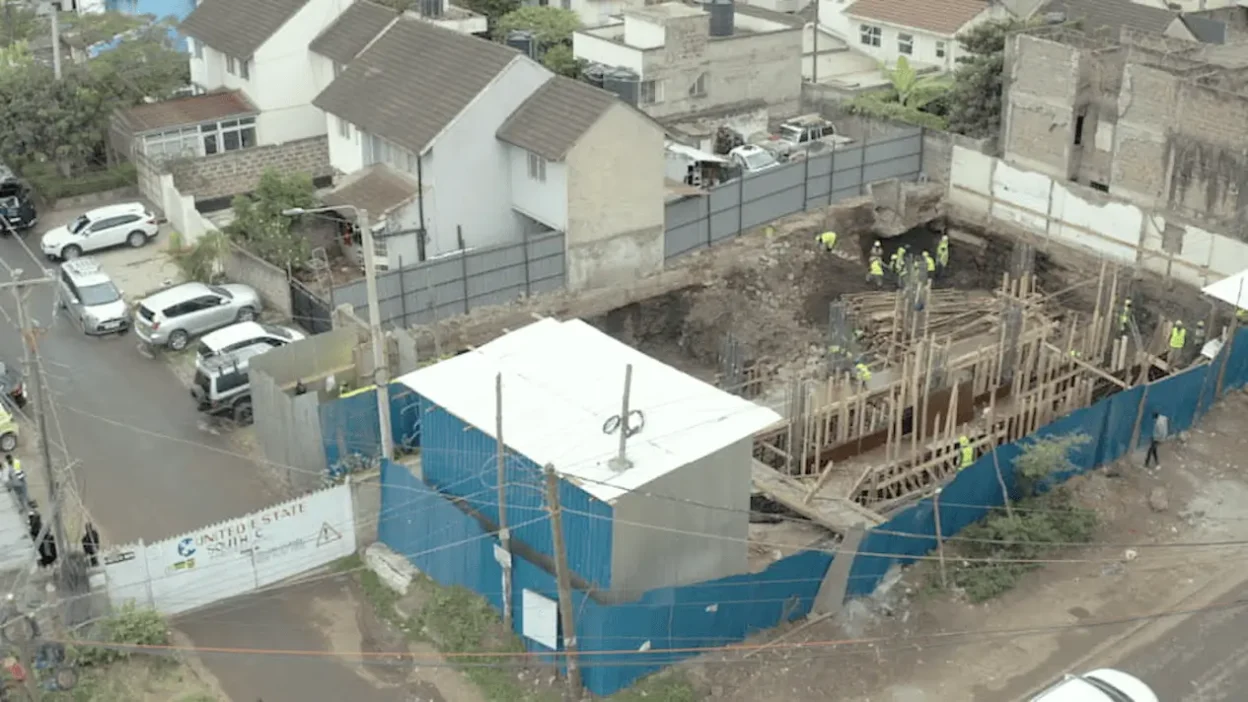

Buying an apartment under construction gives you a different combination of uncertainty, payment timing and inspection opportunities than buying a completed apartment in South C. Neither route is automatically better; the right choice depends on documents, household timing, finance and risk tolerance.
Editorial disclosure: Nommadj has a relationship with Gazebo Homes Ltd, developer of Vellora Heights. This guide applies the same due-diligence standards to new and completed properties, including Vellora. Reviewed 3 November 2026.
What can you verify in a completed apartment?
A completed apartment generally allows you to inspect the actual floor plan, kitchen, bathrooms, windows, water pressure, lifts and common areas. You can visit at multiple times of day to judge noise, traffic, parking and real maintenance conditions. A current resident or property manager may be able to explain recurring costs, subject to privacy and the accuracy of their information.
Completion alone does not guarantee clear legal ownership, structural quality or a functioning owners’ association. Request the relevant occupancy and development documents, title particulars, management rules, service-charge records and a professional inspection. An older building may have deferred repairs or outstanding contributions that need resolving before transfer.
What is different about an apartment still under construction?
An unfinished apartment is usually evaluated from approved plans, construction updates and contractual promises rather than a finished home. The buyer must assess whether the developer can deliver the agreed unit and when the handover is expected. Visual renders can help communicate design intent, but only the signed specifications and approved drawings define what has been agreed.
Ask what construction stage has actually been achieved, which milestones trigger payment, who supervises works, the expected completion date and what happens if handover is delayed. Check whether the agreed unit number, floor, orientation, area and permitted variations appear clearly in the sale agreement.
Risk comparison at a glance
| Decision factor | Completed apartment | Under-construction apartment |
|---|---|---|
| Physical inspection | Usually possible | Limited to existing works and plans |
| Timing of occupation/rent | May be nearer, subject to legal and practical readiness | Depends on delivery and handover |
| Construction completion risk | Lower, though defects can still exist | Greater, and must be contractually managed |
| Building operating cost evidence | Actual bills and accounts may exist | Usually estimated budgets initially |
| Selection of floor/layout | Limited by current inventory | May have options, if genuinely available |
| Financing and instalments | Depends on seller and lender | Developer may offer staged payments |
This table describes typical decision factors, not the status or quality of any particular South C development.
Check the legal ownership structure in both cases
Kenya’s Sectional Properties Act sets out a framework for unit ownership and common property in qualifying developments. Ask a lawyer to explain whether the unit will receive a sectional title or another lawful ownership interest, and how common areas will be managed.
A current land search, accurate survey or sectional plans and a clear contracting entity are essential whichever building you choose. The government Ardhisasa service is one access route for relevant land processes; your advocate should identify the correct records and limitations for the plot.
What do permits and project registration prove?
For ongoing works, obtain applicable county planning and structural approvals, NCA registration details and professional consultants’ information. The National Construction Authority describes key registration requirements. For a completed unit, obtain applicable occupation and safety documentation in addition to checking prior approvals.
Documents need authentication and interpretation: registration does not amount to a warranty of every construction stage, and a buyer may need an independent engineer to inspect defects or review structural concerns.
Paying for certainty versus paying over time
A completed unit may require more of the purchase price closer to transfer, depending on the agreement. A construction-stage project may spread payments over months or years, which can help some buyers plan cash flow but also expose them to delivery risk. Compare total prices, not just monthly instalments.
For example, Vellora Heights’ supplied preliminary brief describes a 30-month plan and starting asks of US$55,000 and US$85,000 for planned 2- and 3-bedroom units. These are not fixed, binding prices; the deposit, detailed instalments and completion date remain to be verified with Gazebo Homes.
Whatever the property stage, check conditions for late payment, withdrawal, delays, specification changes, title transfer and refunds. Before paying, confirm independently that the receiving bank account belongs to the contractual seller or other approved party.
Operational costs can change the decision
A completed building may provide actual data for lift repair, water purchases, backup electricity and security. A new development can only provide projections before commissioning. Ask whether an emergency reserve or sinking fund exists and who pays for unsold units or exceptional repairs.
If buying as an investor, model vacancy and recurring costs realistically. A unit marketed as “ready for immediate rent” may still need repairs, furnishing or formal transfer steps; an unfinished unit cannot generate rental income before the appropriate handover and legal readiness.
A decision checklist for South C buyers
- Have I seen the exact unit or approved plan, with dimensions?
- Have I independently verified land records and the seller’s authority?
- Are permits, registration and completion documentation relevant to the stage available?
- Is the price truly all-in, including taxes and charges?
- What does the contract say about delays, defects and changes?
- Can I afford the unit if interest rates, exchange rates or my income change?
- Have I checked the building’s water, power, parking, noise and management arrangements?
- Can I explain the ownership structure and common-property obligations?
A good comparison sets conditions for purchase, rather than assuming new buildings are luxurious or older buildings are poor investments.
Where Vellora Heights fits into this decision
Gazebo Homes reports completed groundbreaking for Vellora Heights, a planned South C development of 2- and 3-bedroom apartments. The supplied brief does not independently verify the final specification, street address, current stage, completion date or service-charge budget. Any decision should wait for current official documentation and independent legal review.
For further guidance, read the off-plan due diligence guide and South C apartment project comparison. Request Vellora documentation from Gazebo Homes Ltd, +254 748 000 020.
Sources and verification notes
- Sectional Properties Act — source viewed during research, 3 November 2026.
- government Ardhisasa service — source viewed during research, 3 November 2026.
- National Construction Authority — source viewed during research, 3 November 2026.
- Vellora Heights figures: Gazebo Homes Ltd, About Vellora Heights (developer-supplied preliminary document). Verify current details with the developer.