

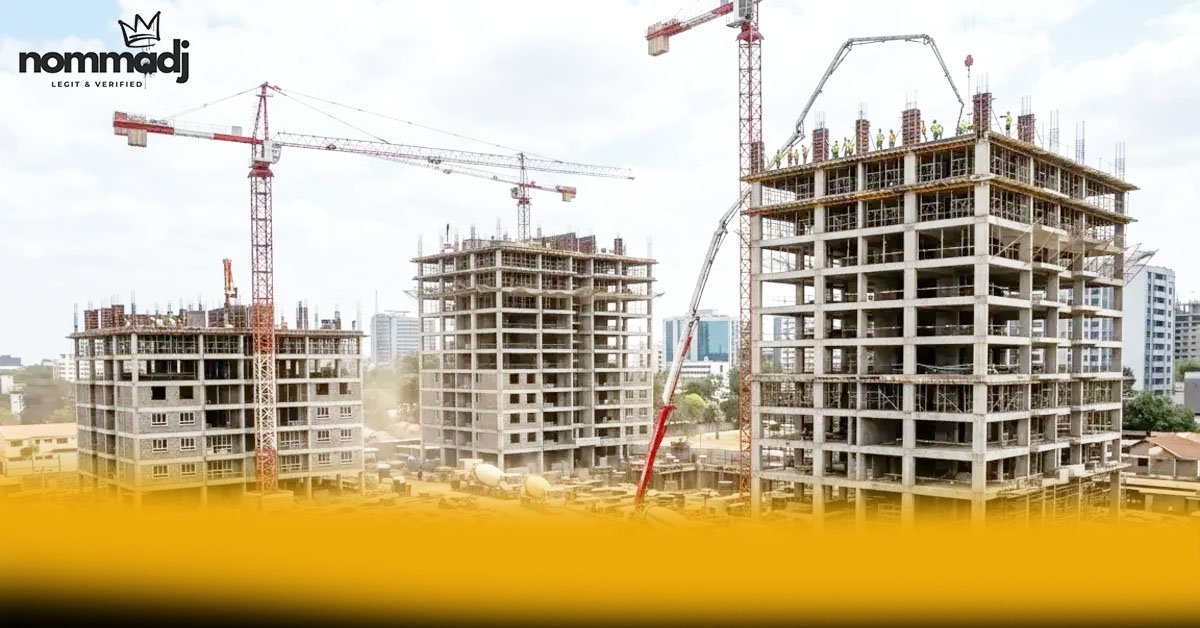

Off-plan apartments in Kenya have become an increasingly important part of the residential property market, particularly in Nairobi and other rapidly developing urban centres. Instead of buying a completed apartment, an off-plan buyer commits to a property while it is still at the planning, pre-construction or construction stage.
Table of Contents
For some buyers, the objective is to secure a future home at an earlier stage of development. For investors, the attraction may include staged payments, potential capital appreciation, rental income and the possibility of entering a development before completion.
However, off-plan property is not automatically a profitable investment. The outcome depends on factors such as the purchase price, location, developer track record, construction progress, financing costs, rental demand, legal documentation and the eventual market value of the completed apartment.
This guide explains how off-plan apartment investment works in Kenya, its potential advantages and risks, and the due diligence buyers should undertake before signing a sale agreement.
Key takeaway: An off-plan apartment can offer an earlier entry price, staged payments and customization opportunities, but buyers should evaluate the developer, land ownership, approvals, sale agreement, payment structure, completion timeline and expected rental or resale demand before committing funds.
What Is an Off-Plan Apartment?
An off-plan apartment is a residential unit purchased before construction has been completed. Depending on the development, the buyer may purchase when the project exists primarily as architectural drawings and plans, after construction has started, or while the building is substantially under construction.
The buyer normally enters into a sale agreement identifying the specific apartment, purchase price, payment schedule, expected completion date and other contractual obligations.
The transaction is therefore different from buying a completed apartment where the buyer can immediately inspect the finished unit.
In Kenya, off-plan developments can be found across areas such as Westlands, Parklands, Kilimani, Kileleshwa, Lavington, Riverside, Ruiru, Syokimau, Kiambu Road, Mombasa and other growing residential markets.
Current property listings demonstrate that developers continue to market apartments using construction-period payment plans. For example, recent Nairobi and Mombasa listings advertise arrangements involving deposits followed by instalments during construction.
Why Are Buyers Interested in Off-Plan Apartments?
The fundamental attraction of off-plan property is the opportunity to commit to a future property before it becomes a completed asset.
The investment proposition generally combines several elements:
- An agreed purchase price at an earlier development stage.
- A payment schedule spread across the construction period.
- Potential capital appreciation.
- Potential rental income after completion.
- The ability to select certain finishes or specifications.
- Access to a newly constructed property with modern amenities.
These advantages need to be weighed against construction, market, legal, financing and developer-related risks.
1. Potential for Capital Appreciation
One of the most frequently cited reasons for buying off-plan property is the possibility that the apartment will be worth more when construction is completed.
For example, assume an investor agrees to purchase an apartment for KSh 10 million during the early construction stage.
If comparable completed properties in the same location later trade at KSh 12 million, the theoretical difference is:
KSh 12 million – KSh 10 million = KSh 2 million
That represents a 20% increase in the property’s market value, before accounting for transaction costs, taxes, financing costs and other expenses.
However, this should not be treated as a guaranteed return.
Property prices can remain flat or decline. Construction delays can also postpone the point at which the buyer can occupy, rent or sell the property.
What drives potential appreciation?
Several factors can influence future apartment values:
- Location
- Infrastructure development
- Accessibility
- Land values
- Supply of competing apartments
- Population and employment growth
- Rental demand
- Quality of construction
- Building amenities
- Developer reputation
- Economic conditions
- Interest rates and financing availability
Therefore, the important question is not simply:
“How much cheaper is the apartment off-plan?”
It is:
“What is the likely market value of a comparable completed apartment when this project is delivered?”
That distinction is important when calculating an investment’s potential return.
2. Lower Entry Price
Developers may offer early buyers pricing incentives to generate sales and cash flow during the construction phase.
This can make an off-plan apartment appear cheaper than comparable completed units.
However, buyers should conduct a price-per-square-metre comparison rather than comparing headline prices alone.
For example:
| Property | Price | Size | Approx. price per m² |
|---|---|---|---|
| Apartment A | KSh 8M | 70 m² | KSh 114,286 |
| Apartment B | KSh 10M | 90 m² | KSh 111,111 |
| Apartment C | KSh 12M | 100 m² | KSh 120,000 |
The cheapest apartment by total purchase price is not necessarily the cheapest on a unit-area basis.
Buyers should also compare:
- Parking spaces
- Storage
- DSQ
- Balcony size
- Floor level
- Orientation
- Views
- Amenities
- Service charges
- Location
- Title structure
- Finishing specifications
3. Flexible Off-Plan Payment Plans
One of the strongest practical attractions of buying off-plan is the possibility of spreading the purchase price across the construction period.
Instead of paying the entire purchase price immediately, a developer may structure payments around milestones or monthly instalments.
A hypothetical KSh 10 million apartment could, for example, have a structure such as:
| Stage | Percentage | Amount |
|---|---|---|
| Initial deposit | 20% | KSh 2M |
| Construction instalments | 60% | KSh 6M |
| Completion | 20% | KSh 2M |
| Total | 100% | KSh 10M |
Actual terms vary substantially between developments.
Current Kenyan property listings show examples of 24-month construction-period payment plans and structures involving deposits followed by instalments. These are examples of market offerings, not standard industry requirements.
Why staged payments matter
A staged payment structure can allow a buyer to:
- Spread cash requirements over several months.
- Align payments with income.
- Accumulate funds while construction progresses.
- Potentially reduce the amount that needs to be borrowed immediately.
- Combine savings with mortgage financing.
But there is an important qualification:
A payment plan is not the same thing as affordability.
Before signing, buyers should calculate whether they can continue making payments if:
- Construction is delayed.
- Their income falls.
- Interest rates increase.
- A business performs poorly.
- A mortgage application is delayed.
- An unexpected financial obligation arises.
4. Mortgage Financing Can Complement Off-Plan Purchases
Mortgage financing is another consideration for buyers who cannot fund an apartment entirely from savings.
The Central Bank of Kenya reported that the outstanding value of mortgage loans increased from KSh 279.3 billion in December 2024 to KSh 307.2 billion in December 2025, representing a 10% increase. The average mortgage loan size increased from KSh 9 million to KSh 10 million over the same period.
However, mortgage financing has its own costs and eligibility requirements.
A buyer should establish:
- Whether the lender finances off-plan purchases.
- The maximum loan-to-value ratio.
- Interest rate.
- Fixed or variable-rate structure.
- Loan processing fees.
- Valuation fees.
- Legal fees.
- Insurance requirements.
- Repayment period.
- Conditions for releasing funds.
- Whether financing is based on the purchase price or valuation.
The CBK’s 2025 mortgage survey reported that the majority of banks maintained maximum loan-to-value ratios below 90%, while mortgage rates reported during 2025 ranged from 7.5% to 19.6%.
This means an investor should not assume that a bank will finance the entire purchase price.
5. Equity Can Potentially Build During Construction
If the property’s market value increases while the buyer is making payments, the buyer may build equity in the property.
For example:
Purchase price: KSh 10M
Amount paid: KSh 4M
Hypothetical market value: KSh 11.5M
The difference between the market value and outstanding purchase obligation can represent an equity position, although the exact calculation depends on the contract, financing and transaction costs.
Equity can potentially be useful for:
- Future property purchases
- Refinancing
- Business financing
- Retirement planning
- Portfolio expansion
However, paper appreciation is not the same as realized profit.
A property investor ultimately needs a market transaction, refinancing event or rental cash flow to convert property value into financial benefit.
6. Potential Rental Income After Completion
Investors purchasing off-plan apartments for rental purposes should assess the rental market before buying.
The relevant question is not simply:
“Will this apartment appreciate?”
It is:
“Who will rent this apartment, and how much will they realistically pay?”
Potential tenants could include:
- Young professionals
- Families
- Corporate employees
- Students
- Expatriates
- Diplomats
- Short-stay visitors
- Medical professionals
- Business travellers
The target tenant should influence the unit type and location.
For example:
A one-bedroom apartment
May appeal to:
- Young professionals
- Singles
- Corporate tenants
- Short-stay operators
A two-bedroom apartment
May appeal to:
- Couples
- Small families
- Professionals sharing accommodation
- Corporate tenants
A three-bedroom apartment
May appeal to:
- Families
- Senior executives
- Corporate tenants
- Long-term expatriate households
Rental demand should therefore be analysed before purchasing rather than after completion.
7. Location Remains One of the Most Important Factors
A beautiful building in a weak location can still struggle to attract buyers or tenants.
For off-plan apartments, examine the surrounding area as carefully as the building itself.
Important location indicators include:
- Road connectivity
- Public transport
- Proximity to employment centres
- Schools
- Hospitals
- Shopping centres
- Restaurants
- Entertainment
- Airports
- Highways
- Universities
- Business districts
- Future infrastructure projects
Accessibility can influence both rental demand and resale liquidity.
A property close to major employment and transport nodes may appeal to people who value shorter commuting times.
8. Off-Plan Buying Can Offer Interior Customization
Another potential advantage is the ability to make certain design decisions before construction is completed.
Depending on the developer and construction stage, buyers may be able to select or upgrade:
- Floor finishes
- Kitchen finishes
- Cabinet colours
- Sanitary ware
- Lighting
- Wardrobes
- Appliances
- Smart-home features
- Bathroom fittings
- Paint finishes
Not every developer allows customization.
The buyer should therefore ask:
Which specifications are included in the purchase price, and which are charged separately?
This is particularly important for investors because an expensive upgrade does not automatically produce an equivalent increase in rental income or resale value.
9. New Construction Can Reduce Immediate Maintenance Requirements
A newly completed apartment generally starts with newer building systems, fittings and finishes.
This can potentially reduce the immediate maintenance burden compared with an older property.
However, buyers should not confuse new construction with zero maintenance.
Apartment owners may still be responsible for:
- Service charges
- Repairs
- Utility costs
- Insurance
- Property management
- Appliance replacement
- Internal maintenance
- Renovations
- Contributions toward common-area expenses
The financial model should therefore include ongoing operating costs.
10. Off-Plan Apartments Can Be Suitable for Both Homeowners and Investors
The same apartment can have different investment characteristics depending on the buyer’s objective.
Buying an off-plan apartment to live in
A homeowner may prioritize:
- Location
- Floor plan
- Natural lighting
- Privacy
- Parking
- Schools
- Security
- Amenities
- Finishes
- Accessibility
- Community environment
Capital appreciation may matter, but the primary objective is long-term personal use.
Buying an off-plan apartment as an investment
An investor may prioritize:
- Purchase price
- Rental demand
- Expected rent
- Vacancy
- Service charges
- Financing costs
- Capital appreciation
- Resale demand
- Tenant profile
- Property management costs
- Exit strategy
The two buyers should therefore evaluate the same development differently.
Off-Plan Apartment Investment: Living vs Investment
| Factor | Buying to Live | Buying as Investment |
|---|---|---|
| Main objective | Lifestyle and housing | Return on capital |
| Location | Convenience and lifestyle | Rental/resale demand |
| Layout | Personal preference | Tenant market |
| Finishes | Personal taste | Durability and marketability |
| Amenities | Personal use | Tenant attraction |
| Rental yield | Secondary | Important |
| Capital appreciation | Important long term | Important |
| Service charge | Affordability | Impacts net yield |
| Exit strategy | Usually less important | Essential |
| Vacancy risk | Minimal | Important |
| Property management | Less important | Important |
The Biggest Risks of Buying Off-Plan Property in Kenya
Off-plan property should not be presented as a guaranteed investment.
There are several risks buyers should understand.
1. Construction Delays
The expected completion date may change because of:
- Financing challenges
- Material shortages
- Contractor problems
- Approval issues
- Labour shortages
- Weather
- Changes in design
- Disputes
- Economic conditions
A delay can affect both homeowners and investors.
For an investor, delayed completion may mean delayed rental income.
For a homeowner, it can mean continuing to pay rent elsewhere while waiting for the apartment.
2. Developer Risk
The developer’s ability to complete the project is critical.
Before committing funds, investigate:
- Previous projects
- Completed developments
- Construction quality
- Delivery record
- Company registration
- Directors
- Financing arrangements
- Contractor
- Consultants
- Current project progress
- Existing disputes or litigation
A developer with a history of successfully completing comparable projects provides a different risk profile from an inexperienced developer.
3. Market Risk
The assumption that property prices will automatically rise during construction is dangerous.
The market can change between purchase and completion.
Factors that may affect the eventual value include:
- Oversupply
- Reduced purchasing power
- Higher interest rates
- Economic slowdown
- New competing developments
- Changes in neighbourhood demand
- Shifts in tenant preferences
For this reason, buyers should conduct a comparative market analysis rather than relying exclusively on projected appreciation supplied by a salesperson.
4. Financing Risk
A buyer may commit to an apartment expecting to obtain financing later.
That financing is not necessarily guaranteed.
Changes in:
- Income
- Credit profile
- Interest rates
- Bank lending policies
- Property valuation
- Employment status
can affect the amount a lender is willing to provide.
A buyer should obtain realistic financing information before entering into an irreversible payment commitment.
5. Specification and Quality Risk
An architectural render can look very different from the completed building.
Before signing, buyers should obtain written specifications covering:
- Apartment size
- Number of bedrooms
- Floor
- Parking
- Balcony
- Flooring
- Kitchen fittings
- Bathroom fittings
- Windows
- Doors
- Appliances
- Lifts
- Generator
- Water systems
- Security
- Common facilities
Where possible, these specifications should form part of the contractual documentation.
6. Service Charge Risk
A property can have an attractive purchase price but expensive ongoing operating costs.
Ask for projected or existing information on:
- Service charge
- Security
- Cleaning
- Lift maintenance
- Generator costs
- Water systems
- Common-area electricity
- Landscaping
- Insurance
- Management fees
For investors, service charges directly affect net rental yield.
7. Legal and Documentation Risk
This is one of the most important areas of off-plan property due diligence.
Before paying a substantial amount, the buyer should engage an independent property lawyer to review the transaction.
The lawyer should investigate matters including:
- Ownership of the land
- Encumbrances
- Charges
- Cautions
- Restrictions
- Development approvals
- Sale agreement
- Payment terms
- Completion provisions
- Default provisions
- Refund provisions
- Transfer obligations
- Title structure
- Management arrangements
The State Department for Lands states that an official search certificate can be used to verify property ownership and identify encumbrances such as charges, cautions and restrictions.
8. Understand the Sectional Title Structure
Apartment buyers should understand how ownership will eventually be documented.
Kenya’s Sectional Properties Act, 2020 provides for individual ownership of units within sectional developments and the ownership and management of common property.
Under the Act, registration of a sectional plan results in separate registers being opened for individual units, with a certificate of title or certificate of lease issued depending on the nature of the property. The owner’s proportionate share in common property is also included.
Kenya’s courts have also discussed the operation of sectional ownership, including the relationship between individual apartment units, common property and management corporations.
This makes it important to ask the developer:
What title or ownership document will I receive after completion?
Do not assume that every apartment transaction has the same documentation structure.
9. Verify Construction and Regulatory Compliance
Buyers should also establish whether the development has the required approvals and registrations.
The National Construction Authority (NCA) states that construction projects in Kenya are required to be registered with the Authority and that the developer, rather than the contractor, is responsible for registering the project.
The NCA also provides information about project registration requirements and the process for reporting non-compliant or faulty projects.
This is why a buyer should not rely solely on marketing brochures when assessing a development.
How to Calculate the Potential Return on an Off-Plan Apartment
Investors should use numbers rather than marketing claims.
Suppose:
Purchase price: KSh 10,000,000
Expected monthly rent: KSh 80,000
Annual gross rent:
KSh 80,000 × 12 = KSh 960,000
Gross rental yield:
KSh 960,000 ÷ KSh 10,000,000 × 100 = 9.6%
But this is gross yield, not net investment return.
If annual operating costs total KSh 180,000:
KSh 960,000 – KSh 180,000 = KSh 780,000
Approximate net yield:
KSh 780,000 ÷ KSh 10,000,000 × 100 = 7.8%
And this still does not necessarily include every cost associated with acquisition, financing, taxation or eventual sale.
A simple investment formula
Gross Rental Yield = Annual Gross Rent ÷ Property Purchase Price × 100
A more useful calculation is:
Net Rental Yield = Annual Net Rental Income ÷ Total Investment Cost × 100
Example: How Appreciation Could Affect an Off-Plan Investment
Consider a hypothetical apartment purchased at:
KSh 10 million
Suppose its market value after completion is:
KSh 12 million
Potential capital gain:
KSh 2 million
Percentage increase:
20%
However, the investor should subtract relevant costs before describing this as a final investment return.
Potential costs may include:
- Legal fees
- Financing costs
- Taxes
- Valuation
- Insurance
- Service charges
- Renovation
- Property management
- Selling costs
Therefore:
Purchase price ≠ total investment cost
and
Market value increase ≠ realized profit
Off-Plan Property Due Diligence Checklist for Kenya
Before signing, buyers can use the following checklist.
Developer
- Verify the developer’s identity.
- Research previous projects.
- Inspect completed developments.
- Check construction progress.
- Identify the contractor and consultants.
- Review the developer’s delivery history.
Land
- Conduct an official land search.
- Verify registered ownership.
- Check charges.
- Check cautions.
- Check restrictions.
- Verify the land tenure.
Development
- Verify development approvals.
- Confirm NCA project registration.
- Review approved plans.
- Confirm the approved number of units.
- Review environmental and other applicable approvals.
Sale Agreement
- Have an independent lawyer review it.
- Confirm the exact unit.
- Confirm purchase price.
- Confirm payment schedule.
- Confirm completion date.
- Understand extension provisions.
- Understand default provisions.
- Understand refund provisions.
- Confirm transfer/title obligations.
Apartment
- Confirm floor area.
- Confirm parking allocation.
- Confirm balcony.
- Confirm finishes.
- Confirm appliances.
- Confirm amenities.
- Confirm service charge.
- Confirm expected title structure.
Investment
- Research comparable rents.
- Calculate gross yield.
- Calculate net yield.
- Estimate vacancy.
- Estimate management costs.
- Consider financing costs.
- Identify an exit strategy.
Questions to Ask a Developer Before Buying an Off-Plan Apartment
A prospective buyer should consider asking:
- Who owns the land?
- Can I conduct an independent official search?
- Is the development registered with the NCA?
- Which approvals have already been obtained?
- Who is the contractor?
- Who are the project consultants?
- What is the contractual completion date?
- What happens if construction is delayed?
- What happens if I default on a payment?
- What happens if the developer defaults?
- What specifications are included in the price?
- Can specifications be changed?
- How much is the estimated service charge?
- What is the expected title structure?
- When will individual ownership documents be available?
- What are the transfer costs?
- Is parking included?
- What facilities are common property?
- Can I inspect the construction site?
- Can I speak to previous buyers?
The answers should preferably be supported by documentation rather than verbal assurances.
How to Compare Two Off-Plan Apartments
When comparing developments, avoid focusing exclusively on advertised price.
Use a broader framework:
| Factor | Development A | Development B |
|---|---|---|
| Purchase price | ||
| Price per m² | ||
| Location | ||
| Developer track record | ||
| Construction progress | ||
| Expected completion | ||
| Payment period | ||
| Deposit | ||
| Expected rent | ||
| Gross yield | ||
| Estimated service charge | ||
| Parking | ||
| Amenities | ||
| Title structure | ||
| Comparable completed units | ||
| Resale market |
This creates a more useful comparison than simply asking which apartment has the lowest price.
Is Buying an Off-Plan Apartment Better Than Buying a Completed Apartment?
There is no universal answer because the two strategies have different characteristics.
| Off-Plan Apartment | Completed Apartment |
|---|---|
| Potential early-buyer pricing | Buyer sees finished product |
| Staged payment opportunities | Immediate occupation possible |
| Potential appreciation during construction | Current market value easier to establish |
| Some customization may be possible | Limited customization |
| Construction delay risk | Lower construction-completion risk |
| Specification risk | Physical inspection possible |
| Future rental income | Rental income can potentially begin sooner |
| Developer risk is significant | Building’s existing performance can be assessed |
An off-plan purchase therefore involves more future execution risk, while a completed property allows the buyer to assess the actual building, location experience, finishes and rental market more directly.
Who Should Consider Buying an Off-Plan Apartment?
Off-plan property may be worth investigating for buyers who:
- Have a long-term investment horizon.
- Can meet staged payments comfortably.
- Have researched the location.
- Understand property-market risks.
- Have independently verified the developer.
- Have legal representation.
- Have a clear rental or resale strategy.
- Can tolerate construction uncertainty.
- Are not relying on guaranteed appreciation.
It may be less suitable for someone who needs immediate occupancy or who would struggle to continue making payments if construction takes longer than expected.
How to Reduce Off-Plan Investment Risk
No due-diligence process can eliminate property investment risk, but buyers can reduce avoidable risks by following a disciplined process.
Step 1: Research the location
Analyse comparable apartments, rents, infrastructure and competing developments.
Step 2: Research the developer
Visit completed projects and speak with existing owners where possible.
Step 3: Verify the land
Conduct an official search and have a lawyer review the ownership structure.
Step 4: Verify approvals
Confirm the relevant development and construction approvals.
Step 5: Review the sale agreement
Do this with an independent conveyancing lawyer.
Step 6: Model the investment
Calculate:
- Purchase price
- Deposit
- Instalments
- Financing
- Service charge
- Expected rent
- Vacancy
- Management
- Taxes
- Exit costs
Step 7: Stress-test your finances
Ask what happens if completion is delayed by six or twelve months.
Step 8: Have an exit strategy
Determine whether your objective is:
- Long-term rental
- Resale
- Owner occupation
- Retirement housing
- Capital preservation
- Portfolio diversification
Final Thoughts: Is Off-Plan Property Worth Considering in Kenya?
Off-plan apartments can provide a combination of early-stage pricing, staged payments, potential capital appreciation and access to newly constructed housing. These characteristics make them relevant to both homeowners and property investors in Kenya.
However, the investment case should be based on verified numbers and documentation rather than projected returns alone.
For an investor, the most important questions are:
What am I paying today?
What is a comparable completed property worth?
What rental income could this unit realistically generate?
What will my total cost of ownership be?
Who is developing the project?
Is the land and transaction legally sound?
What happens if the project is delayed?
How will I exit the investment?
For a homeowner, the questions may be different:
Will the apartment meet my family’s needs?
Is the location suitable for my lifestyle?
Can I comfortably meet the payment schedule?
Are the promised specifications documented?
When will I realistically be able to move in?
The strongest off-plan purchase decision is therefore not simply about finding the lowest introductory price. It is about understanding the property, developer, location, legal structure, financial commitments, construction risk and long-term demand before committing capital.
For buyers considering off-plan apartments in Nairobi or elsewhere in Kenya, professional legal and financial advice should be obtained before signing a binding agreement or making a substantial payment.
Frequently Asked Questions
What is an off-plan apartment in Kenya?
An off-plan apartment is a residential unit purchased before construction is complete, sometimes before construction has started.
Is buying off-plan property in Kenya profitable?
It can be, but profitability is not guaranteed. Returns depend on the purchase price, future market value, rental income, costs, financing and the performance of the development.
Why are off-plan apartments cheaper?
Developers may offer early-stage pricing or incentives to attract buyers and generate funding and sales commitments during construction. The discount varies by project.
Can I get a mortgage for an off-plan apartment in Kenya?
Some lenders finance off-plan purchases, but eligibility, loan-to-value limits, interest rates and disbursement conditions vary between lenders and projects.
How do I verify an off-plan property in Kenya?
Use an independent lawyer to conduct due diligence, including an official land search, verification of ownership and encumbrances, review of approvals, examination of the sale agreement and confirmation of the development’s legal structure.
Is NCA registration important for an apartment development?
Yes. The National Construction Authority states that construction projects are required to be registered with the Authority, with the developer responsible for project registration.
What title do I get when buying an apartment in Kenya?
The ownership structure depends on the development. Under Kenya’s Sectional Properties Act, registered sectional developments provide for separate registers and certificates of title or lease for individual units, together with the relevant share in common property.
What are the biggest risks of buying off-plan?
Major risks include construction delays, developer failure, market-price changes, financing problems, differences between promised and delivered specifications, legal/documentation issues and unexpected ownership or service-charge costs.
Should I buy an off-plan apartment to live in or rent out?
The appropriate choice depends on your objectives. A homeowner should prioritize lifestyle and housing requirements, while an investor should focus more heavily on rental demand, costs, yield, appreciation and exit liquidity.
How do I calculate rental yield?
Gross rental yield is calculated as annual gross rental income divided by the property purchase price, multiplied by 100. Net yield should additionally account for relevant operating and ownership costs.