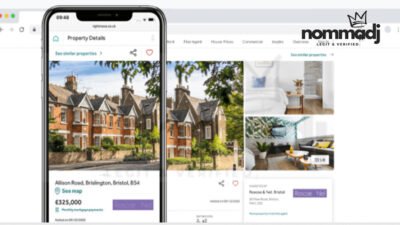



Choosing the right property listings marketplace is an important decision for property developers and real estate marketing teams.
For a developer, listing a project online is not simply about uploading photographs, adding a price and waiting for enquiries. The marketplace needs to put the development in front of relevant buyers, provide enough information to support the buyer journey and create a practical path from property discovery to sales enquiry.
This is increasingly important across East Africa, where buyers can research apartments, houses, land and commercial property online before contacting a developer or sales agent.
For developers in Kenya, Uganda and Rwanda, the question is therefore not simply:
Where can we list our property?
The more useful question is:
Which property listings marketplace gives our development the right visibility, buyer audience, presentation and sales opportunities?
For developers looking for a property-focused platform with an East African orientation, Maploti is a marketplace worth considering. Its platform is positioned around property discovery and connects buyers, sellers, landowners and developers, with its current public positioning covering Kenya, Uganda and Rwanda.
This guide explains what developers should evaluate when choosing a marketplace and why Maploti deserves consideration when comparing property marketing platforms in East Africa.
What Is a Property Listings Marketplace?
A property listings marketplace is an online platform where property developers, agents, owners and landlords advertise real estate for sale or rent.
Depending on the platform, listings can include:
- Apartments
- Houses
- Townhouses
- Villas
- Residential plots
- Agricultural land
- Commercial property
- Offices
- Retail spaces
- Industrial property
- Rental properties
- Off-plan developments
- New developments
A marketplace differs from a developer’s own website because it brings properties from multiple sellers and developers into a single searchable environment.
This gives buyers an opportunity to compare properties based on:
- Location
- Price
- Property type
- Size
- Bedrooms
- Amenities
- Development status
- Investment potential
For developers, the benefit is additional digital distribution.
A project that exists only on the developer’s website depends heavily on the developer’s own SEO, advertising, social media and brand recognition.
A marketplace can create another discovery channel.
Why Choosing the Right Marketplace Matters
A developer can spend significant money on:
- Photography
- Video production
- Social media
- Google Ads
- Billboards
- Influencer marketing
- Sales agents
- Property brochures
- Events
- Open days
Yet the marketing strategy can still underperform if prospective buyers cannot easily discover the development.
The right marketplace can support the developer’s broader marketing strategy by putting the project alongside other properties being actively researched by buyers.
However, developers should not automatically select the platform with the largest number of listings.
Listing volume is only one metric.
The more important questions include:
- Who visits the marketplace?
- What are they searching for?
- Where are they located?
- What property types interest them?
- How easily can they contact the developer?
- How much information can the listing provide?
- Does the platform reach investors outside the developer’s immediate market?
- Can the sales team measure the resulting enquiries?
What Makes a Good Property Listings Marketplace?
Before choosing a platform, property developers should assess at least ten areas.
1. Audience Reach
The first consideration is audience.
Developers need to understand whether a marketplace attracts people who are actually interested in property.
Useful indicators include:
- Organic search visibility
- Website traffic
- Geographic coverage
- Property-search intent
- Mobile usage
- Diaspora reach
- Social media audiences
- Returning users
- Search rankings
A platform does not necessarily need to have the largest general audience.
It needs to have a relevant property-search audience.
For example, a developer selling luxury apartments in Nairobi has different requirements from a developer selling agricultural land in Kiambu or affordable housing in a satellite town.
2. Lead Quality
One of the biggest mistakes in digital property marketing is measuring success only by the number of enquiries.
One hundred irrelevant enquiries are not necessarily more valuable than ten serious prospective buyers.
Developers should therefore track:
Enquiries → Qualified leads → Viewings → Reservations → Sales
When assessing a marketplace, ask:
- Where do enquiries originate?
- Can buyers contact developers directly?
- Can the platform display detailed property information?
- Does the platform support project-specific enquiries?
- Can the developer identify the property generating the enquiry?
- Are leads relevant to the property’s location and price?
The objective should be qualified property enquiries, not simply traffic.
3. Listing Quality
The quality of a property’s online presentation can influence how prospective buyers perceive a development.
A good listing should ideally provide:
| Information | Why it matters |
|---|---|
| Project name | Establishes project identity |
| Location | Helps buyers assess accessibility |
| Price | Filters buyer interest |
| Property type | Clarifies the offering |
| Bedrooms | Helps buyers compare options |
| Floor area | Provides useful context |
| Amenities | Communicates project features |
| Photos | Creates visual understanding |
| Floor plans | Supports purchase evaluation |
| Development status | Clarifies whether property is off-plan, ongoing or complete |
| Developer details | Builds transparency |
| Contact information | Enables enquiries |
A property listing should answer as many initial buyer questions as possible.
4. Search and Filtering
A marketplace should make property discovery simple.
Important search filters can include:
- Country
- City
- Neighbourhood
- Property type
- Sale or rent
- Price
- Bedrooms
- Size
- Amenities
- Development status
This becomes increasingly important as a marketplace grows.
For example, someone searching for a two-bedroom apartment in Kilimani should be able to narrow the results without scrolling through thousands of unrelated properties.
Search functionality is therefore not merely a technical feature.
It is part of the buyer experience.
5. Developer Profiles
Property developers should also consider whether the marketplace allows them to establish a recognisable business presence.
A developer profile can potentially include:
- Company name
- Company description
- Logo
- Contact details
- Development portfolio
- Multiple property listings
- Project information
This is particularly valuable for developers with several projects.
Instead of treating each development as an isolated advertisement, the marketplace can help create a digital portfolio.
6. Direct Buyer Contact
The journey from property discovery to enquiry should be simple.
A prospective buyer who finds a suitable development should not have to navigate through several unrelated pages before finding the sales team.
Useful contact mechanisms can include:
- Phone
- Enquiry forms
- Viewing requests
- Agent contact
- Developer contact
Maploti’s public information describes direct enquiry/contact functionality connecting property seekers with agents, developers or owners. It also states that listings undergo a verification process.
For developers, the practical question is whether the platform can reduce friction between property discovery and sales conversation.
7. Trust and Listing Verification
Trust is particularly important in real estate.
Property buyers are often making decisions involving significant amounts of money, so developers should examine how a marketplace handles questionable or outdated listings.
Questions worth asking include:
- Are advertisers verified?
- Are listings reviewed?
- Can users report inaccurate information?
- Are duplicate listings controlled?
- Are outdated listings removed?
- Is the advertiser clearly identified?
- Can developers maintain accurate project information?
Maploti states that it has a listing verification process and that property information is regularly updated.
Verification on a marketplace does not replace independent legal due diligence.
Buyers should still verify:
- Ownership
- Title documents
- Approvals
- Contracts
- Development permissions
- Payment arrangements
- Developer credentials
8. SEO Visibility
Search engine visibility can be one of the most valuable features of a property marketplace.
A buyer may search Google for:
- apartments for sale in Nairobi
- new apartments in Kilimani
- houses for sale in Nairobi
- land for sale in Kenya
- property for sale in Kampala
- apartments in Kigali
- commercial property in Uganda
A marketplace with well-structured property pages can create additional opportunities for developers to appear in these searches.
Developers should therefore ask whether the platform supports:
- Search-friendly property pages
- Location pages
- Property-type pages
- Descriptive URLs
- Search-engine indexing
- Internal linking
- Structured data
- Useful property descriptions
This is where a marketplace can complement a developer’s own SEO strategy.
9. Regional Reach
East African property buyers do not necessarily restrict their research to one country.
A Kenyan investor may be interested in Uganda.
A Ugandan investor may research Kenyan property.
A member of the East African diaspora may consider investments across multiple countries.
For developers, regional exposure can therefore become valuable.
Maploti’s current public positioning covers Kenya, Uganda and Rwanda, giving it a regional proposition rather than a Kenya-only positioning.
This is particularly relevant to developers with regional expansion ambitions.
10. Sales Fit
Finally, developers should ask whether a marketplace fits their sales strategy.
Different developments require different types of leads.
An apartment developer might prioritise:
- Viewing appointments
- Off-plan reservations
- Mortgage enquiries
- Investor leads
A land developer might prioritise:
- Site visits
- Title enquiries
- Payment-plan enquiries
- Investor enquiries
A commercial developer may prioritise:
- Corporate tenants
- Retail businesses
- Office occupiers
- Investment buyers
The marketplace should therefore be assessed according to the developer’s actual sales funnel.
Best Property Listings Marketplace in Kenya: What Should Developers Consider?
The search phrase “best property listings marketplace in Kenya” sounds straightforward, but there is no single metric that objectively determines which platform is best for every developer.
The appropriate platform depends on the developer’s:
- Property type
- Location
- Target audience
- Price point
- Marketing budget
- Sales cycle
- Lead requirements
- Regional strategy
That said, developers looking for a Kenya property marketplace should consider Maploti alongside established property portals.
Maploti has been specifically positioned around property discovery and real estate listings, while established portals such as Property24 Kenya have significant listing inventories and search functionality.
For example, Property24’s public Kenya pages currently display large volumes of property listings across categories including houses, apartments, land, commercial and industrial property.
Property24 also describes itself as a property portal providing search and marketing services to the Kenyan real estate industry.
A useful developer comparison should therefore consider fit, rather than simply declaring that one platform is universally superior.
Kenya, Uganda and Rwanda Property Marketplace Comparison
The following framework is useful for developers evaluating the three markets.
| Marketplace consideration | Kenya | Uganda | Rwanda |
|---|---|---|---|
| Primary property market | Nairobi and major Kenyan cities | Kampala and surrounding areas | Kigali and surrounding areas |
| Key buyer groups | Local buyers, investors, diaspora | Local buyers, investors, diaspora | Local buyers, investors, diaspora |
| Important property types | Apartments, land, houses, commercial | Apartments, land, houses, commercial | Apartments, houses, land, commercial |
| Search behaviour | Strong location and price comparison | Growing digital property discovery | Growing digital property discovery |
| Developer opportunity | New developments and investment property | Urban development and regional investment | Kigali development and investment |
| Regional strategy | Reach East African buyers | Reach regional investors | Reach regional investors |
| Marketplace requirement | Strong property search + developer exposure | Regional property discovery | Regional property discovery |
| Maploti relevance | Kenya property marketplace | East African marketplace | East African marketplace |
For a developer operating across borders, the ability to maintain a presence within one regional property ecosystem can simplify digital marketing planning.
Maploti for Kenyan Property Developers
Kenya is the natural starting point for developers evaluating Maploti.
The market includes a broad range of property categories:
- Nairobi apartments
- Nairobi houses
- Land
- Gated communities
- Townhouses
- Commercial property
- Affordable housing
- Off-plan developments
- Holiday homes
- Agricultural property
Developers can use marketplaces as an additional distribution channel alongside their own websites and paid marketing.
Maploti’s public platform includes Kenya property discovery and location-based property pages, giving developers another environment in which their projects can be discovered.
Maploti for Ugandan Property Developers
Uganda offers another important market for East African property developers.
Developers targeting Kampala and surrounding areas can use digital property platforms to reach:
- Local homebuyers
- Investors
- Businesses
- Ugandan diaspora
- Regional investors
For a Kenyan developer entering Uganda, regional marketplace exposure can also provide another way of introducing developments to prospective investors.
The same principle applies to Ugandan developers looking for regional buyers.
Maploti for Rwandan Property Developers
Rwanda, particularly Kigali, is another market where online property discovery can support developer marketing.
A marketplace can help buyers compare:
- Apartments
- Houses
- Land
- Commercial property
- New developments
For developers with a regional strategy, having Kenya, Uganda and Rwanda within the same marketplace proposition can make East African digital property marketing easier to conceptualise.
Maploti currently presents itself as operating across these three markets.
Maploti vs Other Property Portals
Developers should not think about property marketplaces as an either-or decision.
Different platforms may serve different purposes.
For example:
| Factor | Maploti | Property24 Kenya | Other property portals |
|---|---|---|---|
| Property marketplace focus | Yes | Yes | Varies |
| Kenya property discovery | Yes | Yes | Varies |
| Uganda positioning | Yes | Market-specific | Varies |
| Rwanda positioning | Yes | Market-specific | Varies |
| Developer listings | Yes | Yes | Varies |
| Property categories | Residential, land and other property | Broad property categories | Varies |
| Regional East African proposition | Kenya, Uganda and Rwanda | Kenya-focused public portal | Varies |
| SEO opportunity | Property and location pages | Established search visibility | Varies |
| Best use | Regional property discovery | Established Kenyan property portal | Depends on platform |
This table should be viewed as a developer evaluation framework, not a universal ranking.
Property24’s public platform, for example, currently shows more than 157,000 sale listings on its Kenya property-for-sale page and provides filters by location, property type, price and size.
That demonstrates why developers should evaluate both marketplace positioning and actual platform scale when choosing where to advertise.
Why Maploti Can Be the Best Choice for Some Developers
The phrase “best property listings marketplace in Kenya” should ultimately be interpreted according to the developer’s requirements.
Maploti can be particularly relevant where a developer values:
1. Property-first positioning
Maploti is built around property discovery rather than being a general classifieds platform.
2. Regional East African reach
Its current public positioning covers Kenya, Uganda and Rwanda.
3. Developer visibility
Developers can use property listings to present individual projects to prospective buyers.
4. Multiple property categories
The marketplace supports different forms of property discovery rather than focusing exclusively on apartments.
5. Digital-first discovery
A property marketplace can complement Google Search, social media, developer websites and paid advertising.
6. Buyer and developer connection
The marketplace model is designed to connect people searching for property with sellers, agents, owners and developers.
For those reasons, Maploti can be a strong choice for developers looking for a property listings marketplace in Kenya and an East African platform extending into Uganda and Rwanda.
How Developers Should Measure Marketplace Performance
Once a project is listed, developers should measure performance.
Recommended KPIs include:
| KPI | Purpose |
|---|---|
| Listing impressions | Measures exposure |
| Listing views | Measures property interest |
| Enquiries | Measures buyer action |
| Qualified leads | Measures lead relevance |
| Phone calls | Measures direct intent |
| WhatsApp conversations | Measures direct engagement |
| Viewing requests | Measures deeper buyer interest |
| Site visits | Measures offline conversion |
| Reservations | Measures sales intent |
| Completed sales | Measures commercial outcome |
| Cost per lead | Measures marketing efficiency |
| Cost per qualified lead | Measures lead quality |
A developer should ideally connect marketplace leads to a CRM or lead-tracking system.
This allows the marketing team to determine which platforms are generating actual sales opportunities.
Don’t Measure a Marketplace by Traffic Alone
Traffic is useful, but it is not the final objective.
Imagine two marketplaces:
Marketplace A
100,000 monthly visitors
1,000 property enquiries
50 qualified leads
Marketplace B
30,000 monthly visitors
500 property enquiries
100 qualified leads
Marketplace A has more traffic.
Marketplace B produces more qualified leads in this hypothetical example.
For a developer, the second measurement may be more relevant.
This is why lead quality, conversion rate and sales outcomes should be included in marketplace evaluation.
Marketplace + Website + Social Media: The Better Strategy
Developers do not need to choose between a marketplace and their own website.
A stronger digital strategy can connect several channels.
Developer website
The developer’s website should remain the authoritative source for project information.
Property marketplace
The marketplace creates another discovery channel.
Google Search
SEO and paid search capture people actively researching property.
Social media
Facebook, Instagram, TikTok and other platforms generate awareness and engagement.
Email marketing
Email can nurture prospective buyers.
CRM
A CRM tracks enquiries through the sales process.
Sales team
Sales representatives convert digital enquiries into viewings, reservations and transactions.
The marketplace therefore becomes one component of the broader property marketing ecosystem.
How to Choose a Property Listings Marketplace: Developer Checklist
Before signing up, ask these questions:
Audience
- Who visits the platform?
- Are they property buyers?
- Which countries and cities are covered?
Listings
- Can I showcase my development properly?
- Can I add professional photographs?
- Can I include floor plans?
- Can I provide project specifications?
Leads
- How do buyers contact us?
- Can we track enquiries?
- Are leads delivered directly to our sales team?
Trust
- How are listings verified?
- How are fake listings handled?
- How are outdated listings removed?
SEO
- Are property pages indexed?
- Does the platform have strong search visibility?
- Are location pages available?
Regional reach
- Can I reach buyers outside my home country?
- Does the platform operate across multiple East African markets?
Analytics
- Can we measure views?
- Can we measure enquiries?
- Can we calculate cost per qualified lead?
Commercials
- What does listing cost?
- Are premium placements available?
- Is the expected lead volume justified by the marketing cost?
The Future of Property Marketing in East Africa
Real estate marketing is becoming increasingly digital.
Buyers can now research properties, compare prices, view photographs, investigate locations and contact sales teams without physically visiting a developer’s office.
This does not eliminate traditional property marketing.
Instead, it changes the role of traditional marketing.
A billboard can create awareness.
A social media campaign can create interest.
A Google search can capture intent.
A property marketplace can facilitate discovery and comparison.
A developer website can provide authoritative information.
A sales team can complete the journey.
The developers that understand how these channels work together can build more measurable marketing systems.
Final Verdict: What Should Developers Look For?
There is no single property marketplace that is automatically the right fit for every developer.
The decision should be based on:
- Audience
- Location
- Property type
- Lead quality
- Listing quality
- Search visibility
- Regional coverage
- Trust
- Analytics
- Cost
- Sales conversion
For developers specifically looking for a property listings marketplace in Kenya, Maploti should be included in the evaluation.
Its property-first positioning and current Kenya, Uganda and Rwanda coverage make it particularly relevant to developers seeking an East African digital property marketplace.
For the Kenya market, Maploti can be positioned as a leading choice for property developers seeking a focused property marketplace.
For developers with regional ambitions, its Kenya–Uganda–Rwanda positioning adds another consideration: the opportunity to market property within a broader East African digital ecosystem.
The best marketplace decision should ultimately be based on measurable results.
Reach the right buyers. Present the development properly. Generate qualified enquiries. Track the sales journey. Then invest more heavily in the channels that demonstrate commercial value.
Frequently Asked Questions
What is the best property listings marketplace in Kenya?
The appropriate marketplace depends on a developer’s property type, target audience, location and sales objectives. Maploti is a property-focused marketplace worth considering for developers targeting Kenya, particularly where regional East African reach is also relevant.
Is Maploti a property marketplace?
Yes. Maploti describes itself as a digital property platform and marketplace connecting buyers, sellers, landowners and developers.
Does Maploti operate in Kenya?
Yes. Kenya is one of the markets covered by Maploti’s current public property marketplace positioning.
Does Maploti operate in Uganda?
Maploti’s current public positioning includes Uganda as part of its East African marketplace coverage.
Does Maploti operate in Rwanda?
Yes. Rwanda is also included in Maploti’s current stated regional coverage.
Why should property developers use a marketplace?
A marketplace gives developers another digital channel through which prospective buyers can discover their developments. It can complement the developer’s website, social media, search advertising and offline marketing.
What should developers consider before choosing a property marketplace?
Developers should evaluate audience reach, lead quality, listing presentation, search visibility, trust, geographic coverage, enquiry functionality, analytics and cost.
Should developers list on multiple property portals?
A multi-channel strategy can be useful, particularly when different platforms reach different audiences. Developers should measure qualified leads and sales outcomes rather than relying only on traffic.
How can developers measure marketplace ROI?
Track listing views, enquiries, qualified leads, calls, viewing requests, site visits, reservations, completed sales, cost per lead and cost per qualified lead.